



Explosion Proof Transmitters for Hazardous Areas

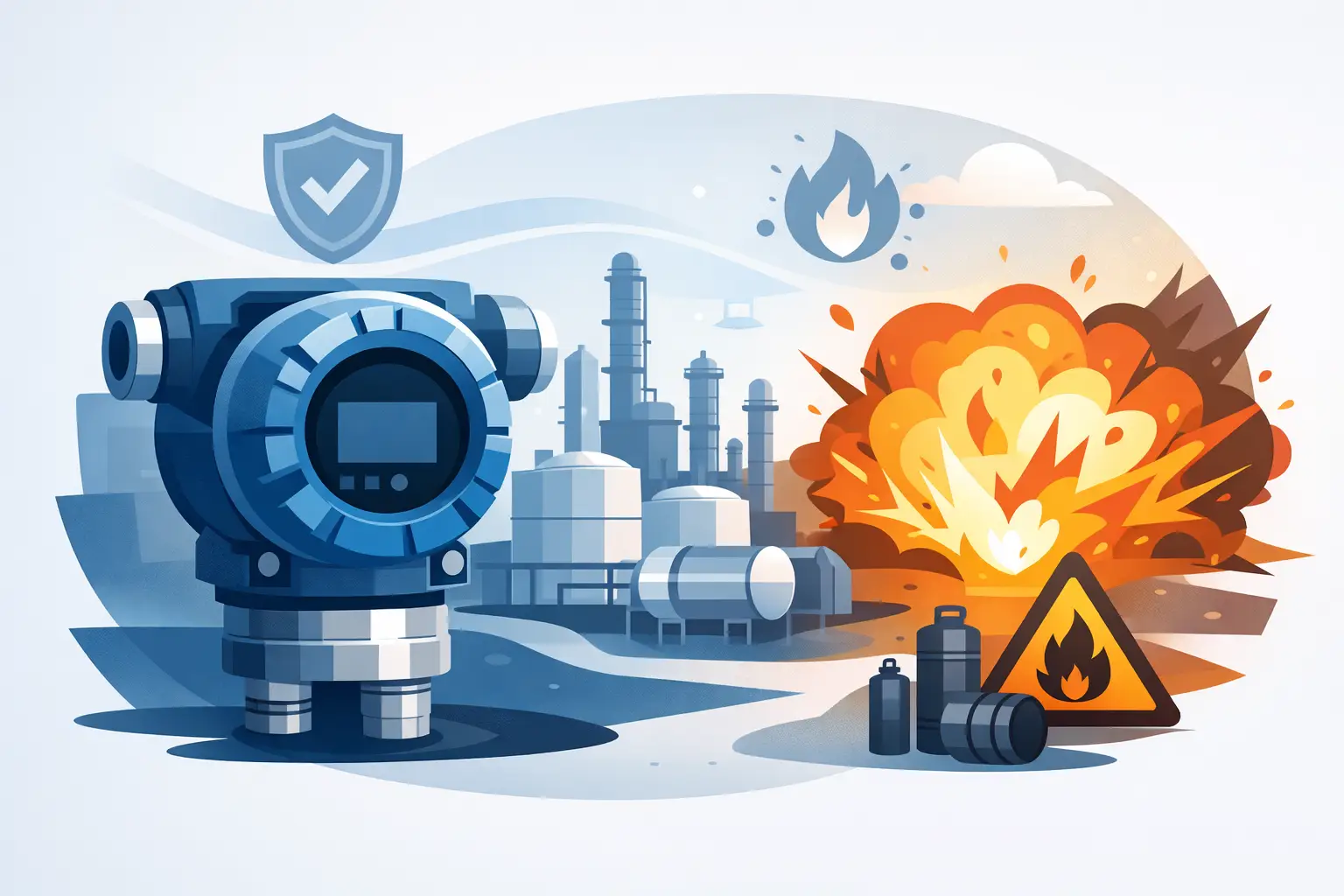
A pressure transmitter installed in the wrong classified location does not fail as a simple parts issue. It becomes a compliance problem, a reliability problem, and potentially an ignition source. That is why explosion proof transmitters-hazardous area applications are usually specified with far more scrutiny than standard plant instrumentation. Buyers are not just matching pressure range and output. They are matching protection method, area classification, enclosure integrity, process connection, wetted materials, and approval markings that must align with the installation.
For plants handling flammable gases, vapors, or combustible dust, the phrase explosion proof is often used loosely. In practice, it has a narrow meaning. The transmitter enclosure is designed to contain an internal explosion and prevent flame propagation to the surrounding atmosphere. That is different from intrinsic safety, nonincendive, or general-purpose construction. If the application is in a classified area, the exact protection concept matters just as much as the pressure or temperature specification.
What explosion proof transmitters for hazardous areas actually mean
Explosion proof transmitters for hazardous areas are built so that if a flammable mixture enters the enclosure and is ignited internally, the housing can withstand the event and cool escaping gases enough to avoid igniting the outside environment. That design requirement drives housing construction, threaded joints, sealing methods, conduit entry practices, and agency approvals.
For the buyer, the key point is simple. You do not select an explosion proof transmitter because the process is harsh. You select it because the installation environment is classified and the device approval must match that classification. A stainless steel transmitter with a high pressure rating is not automatically suitable for a hazardous location. It must carry the correct listing and be installed in accordance with the approval and applicable code requirements.
This is where many specification mistakes happen. Teams may focus on process media compatibility and overlook area classification. Others assume any transmitter with a rugged enclosure is acceptable outdoors in oil and gas or chemical service. The enclosure material, ingress rating, and pressure capability may be correct while the hazardous area approval is not.
Area classification comes before transmitter selection
Before comparing transmitter series, start with the site classification. In the US market, most buyers are working from Class and Division or Class and Zone requirements. That determines what approvals are acceptable and narrows the field immediately.
Class I covers flammable gases and vapors. Class II addresses combustible dust. Class III applies to fibers and flyings. Then you move to Division 1 or Division 2, or in some facilities Zone-based classification. A transmitter suitable for Class I, Division 2 is not automatically acceptable for Class I, Division 1. The difference is not administrative. It reflects how likely the hazardous atmosphere is to be present during normal operation.
Gas group and temperature code also matter. If the site calls for a specific group or T-rating, the device marking must support it. A transmitter may be explosion proof in a general sense and still be unsuitable if its approval does not cover the required gas group or if the surface temperature exceeds the site limit. In applications with elevated ambient temperature, this becomes even more critical because approval ratings can shift depending on operating conditions.
Core transmitter specifications still have to fit the process
Once the hazardous location requirement is established, the normal instrumentation work begins. Pressure range is usually the first filter, but it should not be the only one. Overpressure capability, proof pressure, and static pressure rating can all matter depending on the process design.
In hydraulic systems and pulsating service, a transmitter with an adequate nominal range may still have a short service life if surge conditions are ignored. In vacuum service, compound ranges or absolute pressure options may be required. In low-pressure gas service, accuracy and stability often matter more than enclosure style because signal quality affects control performance.
Wetted material selection is another common point of failure. 316 stainless steel is a strong default for many industrial processes, but not for all media. Sour service, aggressive chemicals, chlorides, and sanitary applications may require a different diaphragm material, fill fluid, or isolation method. If a corrosive process attacks the sensing element, the hazardous approval offers no protection against measurement drift or premature failure.
Electrical output should match the control architecture without creating installation complications. A 4-20 mA output remains common because it is straightforward for PLC, DCS, and loop-powered applications. Some installations may require voltage output or digital communication, but any option has to be considered together with wiring methods, conduit seals, and terminal enclosure requirements for the hazardous location.
Mechanical fit is where replacement jobs get delayed
A large share of transmitter orders are not greenfield specifications. They are maintenance replacements, planned upgrades, or cross-reference purchases where the buyer needs a unit that drops into an existing installation with minimal rework. In these cases, process connection, electrical connection, body style, and mounting format are not secondary details. They determine whether the replacement can be installed during the available outage window.
NPT process threads remain common, but not universal. SAE, flush diaphragm, sanitary clamp, and specialty connections appear regularly in OEM skids, washdown systems, and process lines where dead space or contamination control matters. Electrical entry also needs to match field practice, whether that means conduit hub configuration, cable gland compatibility, or terminal orientation inside an explosion proof housing.
Mounting location affects transmitter longevity more than many specifications sheets suggest. If the device sits near a pump discharge, vibration and transient spikes can shorten life. If it is mounted high on a vessel in direct sun, ambient temperature may push the enclosure toward its rated limit. If it is installed in a washdown zone or offshore environment, corrosion resistance and ingress protection become part of the reliability equation, not just the environmental one.
Approval markings are not paperwork
For explosion proof transmitters-hazardous location compliance depends on the exact markings on the device, not just the catalog description. Procurement teams and maintenance departments should verify the approval label against the site requirement before issuing or installing the part.
That means checking the class, division or zone, gas or dust group, temperature code, ambient range, and any special conditions of use. It also means confirming whether barriers, seals, or specific conduit practices are required as part of the installation. A transmitter can be fully legitimate and still be wrong for the job if the approval basis does not align with the plant classification.
This is one reason authorized sourcing matters. Technical buyers need confidence that the transmitter series, option code, and approval package are exactly what the order calls for. A close substitute is often not good enough in regulated or safety-sensitive environments. Distributor familiarity with exact product nomenclature, available configurations, and manufacturer documentation helps reduce that risk.
Where buyers should expect trade-offs
There is no single best explosion proof transmitter for every hazardous service. A compact design may fit tight panel or skid layouts but provide less wiring room. A heavy-duty enclosure may improve durability while adding installation weight and access constraints. Higher accuracy may increase cost without changing process outcomes in applications where repeatability matters more than absolute precision.
Lead time can also drive practical decisions. Plants facing an outage may prefer a configurable transmitter series with standard approvals and common connection types rather than a highly customized build. That is not a compromise if the selected unit fully meets the site classification and process requirements. It is a procurement decision based on maintainability and availability.
For OEMs and panel builders, standardizing on a limited group of approved transmitter configurations can simplify spare parts planning and documentation. For end users with varied plant conditions, a more segmented strategy may make sense, with different transmitter families assigned to corrosive service, utility service, and high-vibration equipment.
A practical way to qualify the right transmitter
The fastest path to the right specification is to treat the application as two separate filters. First define the hazardous location requirements: class, division or zone, group, T-code, and ambient conditions. Then define the process and installation requirements: pressure range, accuracy, wetted materials, process connection, electrical output, and physical fit.
If either filter is incomplete, the order is at risk. That is why experienced buyers gather the nameplate data from the existing unit, site classification details, and process conditions before requesting a quote. In a specialized instrumentation channel such as Mass Measure, that level of detail usually shortens the transaction because it eliminates back-and-forth on approval mismatches and connection assumptions.
A transmitter in hazardous service is not just another pressure input. It is a device that has to satisfy code, process performance, and field installation reality at the same time. When those three line up, replacement cycles get easier, startup issues drop, and the instrument does its job quietly for years. That is usually the best outcome in any plant – the transmitter disappears into the system because it was specified correctly the first time.
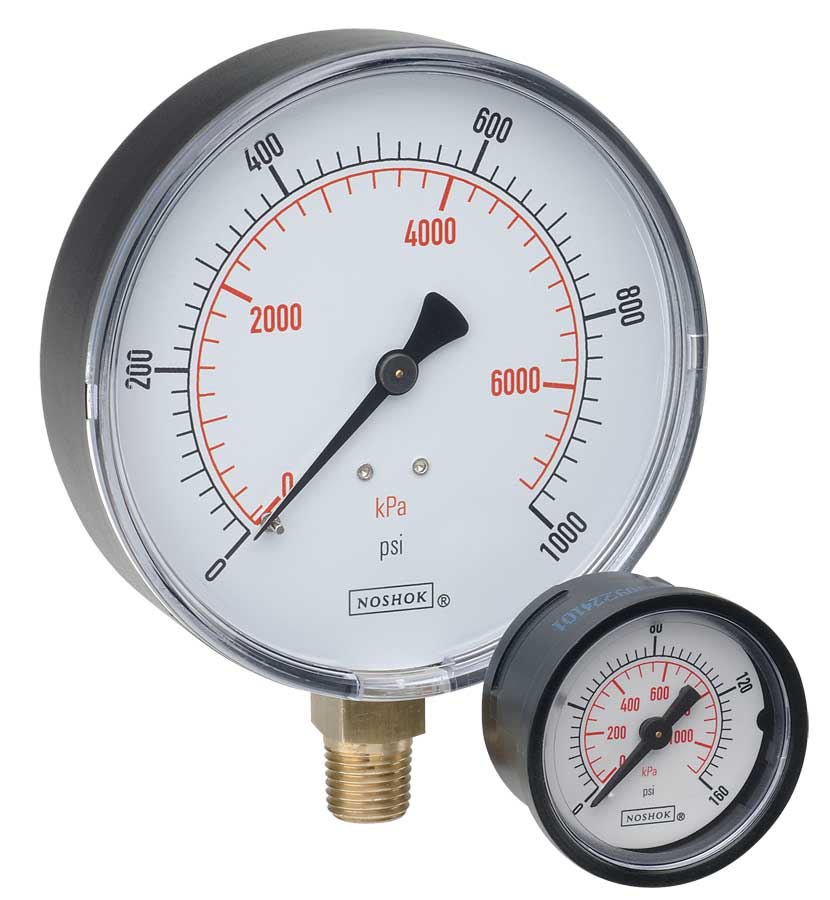 NOSHOK ABS & Steel Dry Pressure Gauges 100 series
 NOSHOK Low Pressure Dry Pressure Gauges-( 200 series)
 NOSHOK PT40 Series High Accuracy Transmitters-Replaces 100,200,615 series