



Water Pressure Sensor Selection Guide

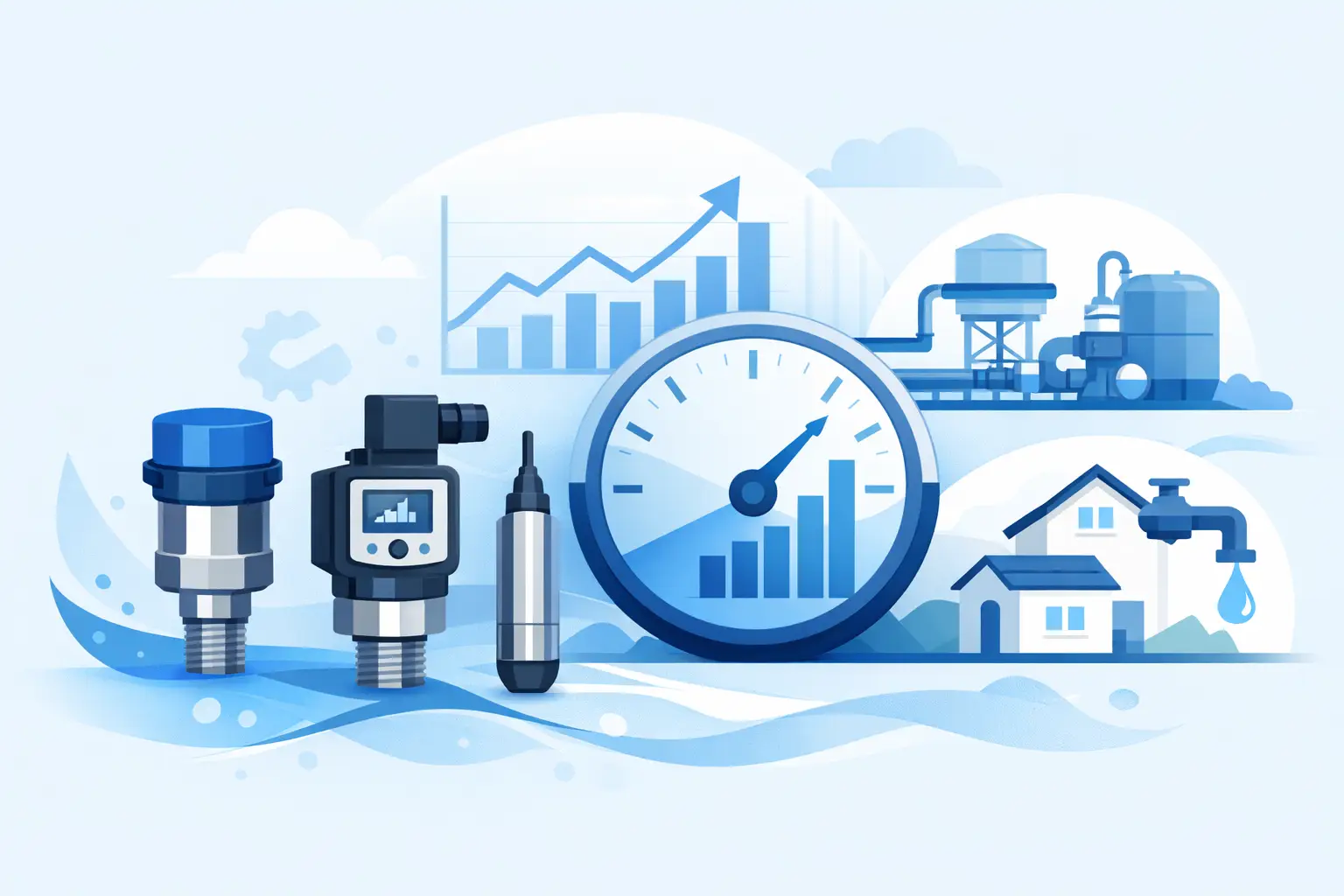
A water pressure sensor can look simple on a line diagram and become a problem the moment it reaches the field. The issue is rarely just pressure range. In most industrial systems, failure points come from the details – wetted material mismatch, wrong electrical output, connection style errors, temperature exposure, vibration, or selecting a general-purpose device for a process that needs instrumentation-grade performance.
For buyers, engineers, and maintenance teams, the right approach is to treat pressure measurement as a specification exercise, not a commodity purchase. If the sensor has to support process control, pump protection, filtration monitoring, tank level by hydrostatic head, or OEM skid integration, the selection criteria need to line up with the actual service conditions.
What a water pressure sensor does in industrial service
A water pressure sensor converts process pressure into an electrical signal that a controller, PLC, display, or monitoring system can use. In water systems, that usually means a transmitter-style device providing a stable output such as 4-20 mA, 0-5 VDC, or 0-10 VDC. In some applications, a switch function is enough, but where trend data, control logic, or continuous process feedback matter, a true sensor or transmitter is the better fit.
The application determines how demanding that measurement loop will be. A municipal or utility water system may need long-term stability and weather resistance. An OEM wash system may need compact packaging and fast response. A plant process line may require chemical compatibility, washdown resistance, and precise repeatability. The term water sounds straightforward, but service conditions vary widely.
Start with the real pressure range
The first specification to confirm is the operating pressure, not just the nominal system pressure. Many sizing mistakes happen because a buyer selects a range based on normal operating conditions and ignores pump startup spikes, water hammer, pressure cycling, or upset conditions.
A properly selected water pressure sensor should measure the expected operating band with enough resolution to be useful while still tolerating occasional transients. If normal operation is 60 to 90 psi, a 0-100 psi range may provide good usable signal. If that same system sees surge events well above 100 psi, a higher range or added surge protection may be required. Too broad a range reduces effective measurement resolution. Too narrow a range shortens service life or leads to overload failure.
This is where application context matters. Booster pump systems, reverse osmosis skids, and high-cycle wash equipment often behave differently from static water distribution lines. The pressure range should reflect actual operating behavior, not a guess based on one gauge reading.
Gauge, absolute, or compound reference
Most industrial water applications use gauge pressure measurement because the reading is referenced to atmospheric pressure. That is typically the correct choice for pump discharge, line pressure, and filter monitoring.
Absolute pressure sensing is less common in standard water distribution service but may be used in specialized process or vacuum-related applications. Compound ranges can be relevant where suction pressure or negative pressure conditions need to be measured. The correct reference type should be confirmed early because it affects both part selection and system interpretation.
Wetted materials are not a minor detail
For a water pressure sensor, wetted material compatibility is one of the most overlooked factors. Buyers often assume water means any stainless steel sensor will work. That may be true for many clean water systems, but it is not universal.
Potable water, treated water, deionized water, aggressive cleaning cycles, chlorinated service, and sanitary process systems can each raise different compatibility issues. 316 stainless steel is common and suitable for many industrial water applications, but sealing materials also matter. Elastomers exposed to cleaning agents, elevated temperatures, or treated water chemistry can become the actual weak point.
If the system is in food processing, pharmaceutical support utilities, or high-purity water service, additional material and cleanability requirements may apply. In those cases, process connection style and surface finish can matter as much as pressure performance. A sensor that is acceptable in general manufacturing may not be suitable in sanitary or regulated service.
Electrical output should match the control architecture
Selecting the wrong output type creates avoidable integration problems. A water pressure sensor may be available in current output, voltage output, or digital configurations, but the right choice depends on the receiving device and installation environment.
For longer cable runs and electrically noisy industrial settings, 4-20 mA remains the standard because it is less susceptible to signal degradation and easier to scale in PLC and control systems. Voltage outputs can work well in compact OEM packages where wiring runs are short and the controller is designed around that input. Digital or programmable devices may add flexibility, but they also add setup and compatibility considerations that are not always necessary for straightforward pressure monitoring.
Power supply requirements, connector type, ingress rating, and cable termination should be reviewed at the same time. Many field issues come from ordering a sensor with the correct pressure range but the wrong connector, pinout, or electrical configuration.
Process connection choices affect reliability
A pressure sensor is only as reliable as its interface with the process. NPT connections remain common across US industrial systems, but not every installation should default to the same fitting. Thread size, mounting orientation, available wrench clearance, and manifold or adapter use all influence serviceability.
Water pressure sensor connection and installation factors
In pump systems or skid-mounted assemblies, compact sensors with standard male NPT process connections are often preferred for ease of installation. In applications with vibration, pulsation, or high cycling, it may be better to isolate the sensor from direct mechanical stress through proper mounting practices, snubbers, or remote arrangements where appropriate.
If the line is subject to water hammer, the sensor should not be treated as the sacrificial component. Pressure spikes can shorten life even when the nominal range appears acceptable. In those systems, surge mitigation and proper sensor placement are part of the measurement solution.
Temperature also needs attention. Media temperature and ambient temperature are separate considerations. A sensor mounted near hot equipment, outdoors in direct sun, or in freeze-prone areas may require a different housing, seal, or mounting approach than the same sensor installed in a controlled interior panel.
Accuracy, stability, and repeatability
Not every water application needs laboratory-grade accuracy, but many industrial buyers underestimate how much long-term stability matters. If the sensor is only used for a simple alarm point, moderate accuracy may be acceptable. If it supports closed-loop pump control, differential trend analysis, or production process verification, tighter accuracy and repeatability become more important.
A low-cost sensor can meet a basic range requirement and still create nuisance issues through output drift, poor zero stability, or inconsistent readings under thermal change. That does not mean the highest-spec device is always necessary. It means the performance level should fit the application. For critical process control or OEM equipment where repeatable field behavior matters, instrumentation-grade selection is usually the safer decision.
Environmental protection and application fit
A water pressure sensor used in a dry panel is a different product decision from one installed in washdown, outdoor utility, or corrosive plant conditions. Enclosure rating, connector sealing, cable jacket material, and resistance to shock and vibration all affect life expectancy.
For general industrial use, a stainless steel body and suitable ingress protection often provide a solid baseline. For washdown areas, sanitary spaces, or outdoor service, sealing integrity becomes more critical. For mobile or vibration-prone equipment, mechanical durability moves higher on the list.
This is also where authorized sourcing matters. Industrial buyers often need exact series continuity for replacement, not just a nominal cross-match. A sensor with the same range and output on paper may still differ in body dimensions, approvals, response characteristics, or material construction. When the requirement is exact replacement or a controlled specification, part-family accuracy matters.
When a switch is enough and when it is not
Some water systems only need a pressure threshold for pump start-stop, alarm, or shutdown. In those cases, a pressure switch may be the right component. But if the control system needs continuous feedback, trending, remote monitoring, or analog scaling, a sensor or transmitter is the correct choice.
Trying to use a simple switch where a true measurement signal is needed usually creates a control limitation later. The opposite is also true. Specifying an analog sensor for a basic on-off duty can add cost without adding value. The best selection follows the control requirement, not just the habit of ordering whatever was used last time.
For industrial buyers sourcing instrumentation, the best results usually come from matching six basics before anything else: pressure range, pressure reference, wetted materials, process connection, electrical output, and environmental conditions. Once those are correct, refining around accuracy, approvals, and packaging becomes much easier.
Mass Measure works in that specification-first environment every day, where exact series alignment and application fit matter more than generic product labels. If a water pressure sensor is being selected for replacement, retrofit, or new equipment build, the right part is the one that fits the process conditions without creating new variables for maintenance or controls.
The useful question is not whether a sensor can read water pressure. It is whether it can read that pressure, in that installation, for that service interval, without becoming the weak link in the loop.