


Explosion-Proof Pressure Transmitter Requirements: A 2026 Guide

Table of Contents
- What an Explosion-Proof Pressure Transmitter Is
- Hazardous Locations and Explosive Atmospheres: Foundational Concepts
- Explosion-Proof Versus Intrinsically Safe Protection Methods
- Hazardous Location Pressure Transmitter Requirements: Certification and Approval Standards
- Explosion-Proof Pressure Transmitter Ratings and Markings: Interpreting Certification Labels
- Intrinsically Safe Pressure Transmitter Design and Entity Parameters
- Hazardous Area Transmitter Installation Requirements and Commissioning
- Practical Requirements Checklist for Hazardous-Area Transmitter Selection
- Frequently Asked Questions
Last Updated: October 14, 2026
What an Explosion-Proof Pressure Transmitter Is
An explosion-proof pressure transmitter is a measurement device built to operate safely in hazardous locations where explosive atmospheres may be present.
A conventional transmitter in a hazardous location becomes an ignition source: an internal spark, hot surface, or arcing contact can ignite flammable vapors, gases, or dust.
Specifying an explosion-proof pressure transmitter means matching its protection method, certifications, and temperature rating to your specific hazardous location.
Hazardous Locations and Explosive Atmospheres: Foundational Concepts
Before selecting an explosion-proof pressure transmitter, you must understand what makes a location hazardous. Terminology differs between North American and international standards, so clarifying definitions upfront prevents costly specification errors.
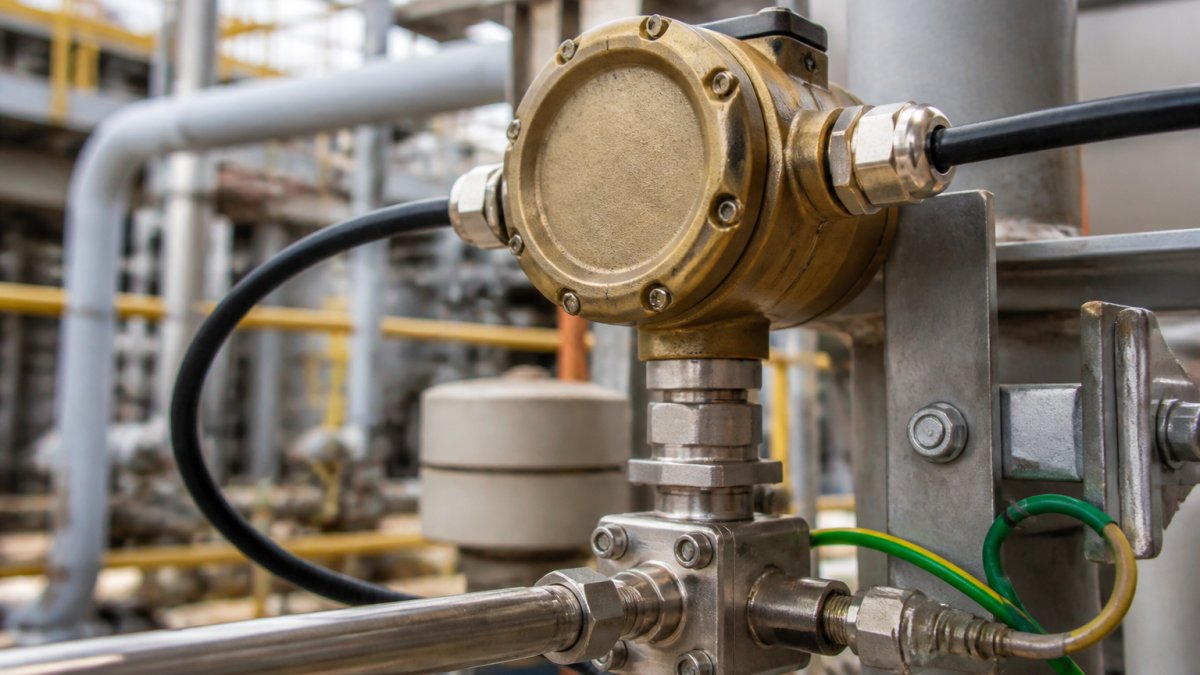
A hazardous location is any area where the atmosphere may contain flammable gases, vapors, or dusts in concentrations high enough to explode if ignited.
An explosive atmosphere exists when a flammable substance (gas, vapor, mist, or dust) mixes with air within its explosive range.
Hazardous-Area Classifications and Zones
The classification system depends on your jurisdiction. North America’s National Electrical Code (NEC) uses a Division system; most other countries follow IEC 60079, which uses a Zone system.
North American Classification (NEC Division System):
- Class I: Flammable gases or vapors present in normal operation
- Class II: Combustible dust present in normal operation
- Class III: Easily ignitable fibers or particles present (textiles, wood processing)
Within each class, equipment is rated for Division 1 or Division 2:
- Division 1: Hazardous atmosphere is likely to exist during normal operation
- Division 2: Hazardous atmosphere is unlikely under normal conditions; present only during abnormal operation or maintenance
International Classification (IEC Zone System):
- Zone 0: Explosive atmosphere present continuously or for long periods
- Zone 1: Explosive atmosphere likely to occur occasionally during normal operation
- Zone 2: Explosive atmosphere unlikely; if it occurs, only briefly
A transmitter rated Division 1 or Zone 1 suits most process applications; Division 2 or Zone 2 equipment is typically cheaper. Mismatching the classification to your actual location creates safety and liability issues.
Gas Groups and Ignition Temperatures
Not all flammable gases present the same explosion risk. Gases are grouped by ignition temperature and explosion characteristics, and the group designation affects which protection method suits your transmitter.
IEC Gas Groups (international standard):
- Group IIA: Propane, butane, gasoline vapors (highest ignition temperature, ~500°C)
- Group IIB: Ethylene, ethyl ether (intermediate ignition temperature, ~425°C)
- Group IIC: Hydrogen, acetylene (lowest ignition temperature, ~135°C)
North American Equivalent (NEC):
- Group A: Acetylene
- Group B: Hydrogen
- Group C: Ethylene, ethyl ether
The lower the ignition temperature, the more stringent the equipment requirements. Hydrogen (Group IIC or Group B) needs the strongest protection because even small temperature rises can ignite it. A transmitter rated Group D won’t necessarily work in a Group IIC application.
Explosion-Proof Versus Intrinsically Safe Protection Methods
Two fundamentally different approaches protect electrical equipment in hazardous locations. Each has different design implications, cost profiles, and application suitability.
Explosion-proof (Flameproof) Protection: The device contains any internal explosion and cools the flame path so exiting gases cannot ignite the surrounding atmosphere.
Intrinsically Safe Protection: Electrical energy (voltage and current) is limited to levels that cannot ignite the hazardous atmosphere under any condition, including faults.
The choice depends on your application.
Hazardous Location Pressure Transmitter Requirements: Certification and Approval Standards
An explosion-proof pressure transmitter must carry certification from a recognized notified body proving it meets the applicable standard for your jurisdiction and hazardous location. Selecting equipment without the correct certification is a regulatory violation and a safety failure.
ATEX and IECEx Standards
The ATEX Directive (2014/34/EU) is the EU’s regulatory framework for equipment used in explosive atmospheres (Equipment for potentially explosive atmospheres (ATEX)).
IECEx is the international certification system administered by the International Electrotechnical Commission. It provides mutual recognition of equipment certified to IEC 60079 standards across participating countries, and is often accepted in regions without their own notified body.
Both systems use the same underlying IEC 60079 standards, but ATEX is mandatory in the EU while IECEx is voluntary yet widely recognized.
CSA Certification and North American Classifications
In North America, the Canadian Standards Association (CSA) and Underwriters Laboratories (UL) are the primary notified bodies for hazardous-location equipment. Equipment must be certified to CSA C22.2 No. 213 (Class I, Division 1 & 2) or equivalent UL standards.
North American Division classifications do not directly map to IEC Zones, a Division 1 device is more stringent than Zone 1 in some respects and less so in others.
At Mass Measure, we help engineers navigate these requirements.
Explosion-Proof Pressure Transmitter Ratings and Markings: Interpreting Certification Labels
The certification markings on a transmitter encode critical information about its suitability for specific hazardous locations. Learning to read them prevents specification errors and ensures compliance.
Reading Ex Markings and Equipment Category
An Ex marking on an explosion-proof pressure transmitter follows a standardized format defined by IEC 60079-0, such as Ex d IIB T4 Gb.
Breaking this down:
- Ex: Indicates the device is certified for explosive atmospheres
- d: The protection method (in this case, flameproof enclosure)
- IIB: The equipment group and category (Group IIB, suitable for ethylene-type gases)
Other common protection method codes include:
- ia: Intrinsically safe (very restrictive, suitable for Zone 0)
- ib: Intrinsically safe (less restrictive, suitable for Zone 1)
- nA: Non-sparking equipment (suitable for Zone 2 only)
The equipment category (a, b, c, or 1, 2, 3) determines zone suitability. Category 1 (or “a”) is the strongest and suits Zone 0; Category 3 (or “c”) suits Zone 2 only. Installing Zone 2 equipment in a Zone 1 location violates the certification and creates a safety gap.
Temperature Class and Maximum Surface Temperature
The temperature class indicates the maximum surface temperature the transmitter can reach under normal operating conditions, critical because a hot surface can ignite flammable gases if it exceeds the gas’s ignition temperature.
IEC Temperature Classes:
- T1: ≤450°C
- T2: ≤300°C
- T3: ≤200°C
For example, a T4 transmitter has a maximum surface temperature of 135°C.
Calculating actual maximum surface temperature requires accounting for ambient temperature, transmitter self-heating, and process heat transfer.
Intrinsically Safe Pressure Transmitter Design and Entity Parameters
Intrinsically safe transmitters limit electrical energy rather than contain explosions.
An intrinsically safe circuit has two zones: the safe area (non-hazardous) and the hazardous area.
Entity parameters are the electrical specifications that define the safe operating envelope:
- Ui: Maximum input voltage
- Ii: Maximum input current
- Pi: Maximum input power
These parameters must match the circuit they connect to.
Intrinsically safe transmitters are often used where frequent equipment changes occur or size is constrained, and are preferred in very high-hazard locations (Zone 0, Group IIC).
Hazardous Area Transmitter Installation Requirements and Commissioning
Certification is the first step; correct installation is the second. An improperly installed explosion-proof pressure transmitter loses its protection regardless of certification.
Wiring, Conduit Seals, and Barrier Verification
The cable entry into an explosion-proof transmitter must be sealed to prevent gases traveling along the cable into the enclosure.
For intrinsically safe transmitters, wiring must be segregated from non-intrinsically safe circuits. Bundling IS wiring with power wiring can introduce capacitance or inductance exceeding the entity parameters; IEC 60079-14 specifies minimum separation distances.
Conduit seals are required in some installations to prevent gases accumulating inside conduit runs.
Before commissioning, verify the transmitter’s entity parameters match the control loop specifications.
Maintenance, Inspection, and Lifecycle Compliance
Explosion-proof and intrinsically safe transmitters require periodic inspection to maintain their protective properties. Frequency depends on the hazardous location class and operating environment.
Inspection checklist:
- Visual examination of the enclosure for cracks, corrosion, or damage
- Verification that cable glands are tight and seals are intact
- Confirmation that the transmitter’s calibration is within acceptable limits
In corrosive environments (offshore, chemical plants), enclosure materials and coatings degrade over time. Stainless steel or nickel-plated brass are common choices but still require inspection, a corroded cable gland seal may appear intact yet lose its sealing effectiveness.
At Mass Measure, our repair and calibration services support the full lifecycle of your transmitters. We maintain inventory of common NOSHOK transmitter models.
Practical Requirements Checklist for Hazardous-Area Transmitter Selection
Selecting the correct explosion-proof pressure transmitter requires systematic verification of several parameters. Use this checklist to guide your specification process.
| Requirement | Your Answer | Notes |
|---|---|---|
| Hazardous location classification (NEC or IEC) | Division ____ / Zone ____ | Determines protection method stringency |
| Flammable substance present | Class ____ Group ____ / Gas Group _____ | Affects temperature class and protection method |
| Pressure range required (min-max psig) | ____ to ____ | Ensures transmitter is not over- or under-ranged |
| Process temperature (min-max °C) | ____ to ____ | Used to calculate maximum surface temperature |
| Ambient temperature range | ____ to ____ | Added to self-heating to determine total surface temperature |
| Electrical output required | 4-20 mA / RS485 / Other: _____ | Affects circuit design and entity parameters |
| Corrosive environment? | Yes / No | Determines material selection (stainless, nickel-plated, etc.) |
| Protection method preferred | Explosion-proof / Intrinsically safe | Affects cost, size, and installation complexity |
| Certifications required | ATEX / IECEx / CSA / UL | Verify equipment carries the mark for your jurisdiction |
| Temperature class needed | T1-T6 | Based on gas ignition temperature and process conditions |
| Installation location | Outdoor / Indoor / Subsea / Buried | Affects enclosure rating and maintenance access |
| Spare transmitter availability | Required? | Lead time and inventory planning |
Before ordering, walk through each line with your application engineer or supplier. Missing or incorrect information leads to field substitutions, safety gaps, and project delays.
Selecting an explosion-proof pressure transmitter requires more than choosing a product with the right pressure range. Our team can help you specify the right transmitter for your application, verify certifications, and provide responsive technical support when you need it. Contact us for a consultation on your hazardous-area transmitter requirements
Frequently Asked Questions
What makes a pressure transmitter explosion-proof?
An explosion-proof pressure transmitter contains the ignition source (electrical components and connections) within a robust enclosure designed to withstand internal explosions. The enclosure has a flame path that cools hot gases before they escape, preventing external ignition. This protection method, called flameproof (Ex d), is one of several approved techniques. The transmitter must also meet strict design, manufacturing, and testing standards set by recognized certification bodies like CSA or ATEX to confirm it can safely operate in hazardous locations.
What requirements apply to pressure transmitters in hazardous locations?
Transmitters for hazardous locations must carry approval markings from a recognized notified body (CSA in North America, ATEX/IECEx in Europe and internationally). The transmitter must match the hazardous-area classification of the installation, Zone 0, 1, or 2 for IEC standards, or Division 1 or 2 for North American standards. It must also be suitable for the specific gas group and temperature class of the atmosphere. The transmitter’s maximum surface temperature must not exceed the ignition temperature of the gas present. All wiring, conduit seals, and installation practices must comply with applicable electrical codes.
What is the difference between explosion-proof and intrinsically safe pressure transmitters?
Explosion-proof transmitters (Ex d) contain the ignition source in a strong enclosure that withstands and cools explosions. Intrinsically safe transmitters (Ex ia or Ex ib) prevent explosions by limiting electrical energy and thermal energy in the circuit so that an ignition source cannot form. Intrinsically safe designs are lighter, smaller, and require no special enclosure, but they depend on certified barriers and loop verification to maintain safety. Explosion-proof transmitters are more robust in harsh environments but are heavier and more expensive. The choice depends on the hazardous-area classification, process conditions, and installation constraints.
How do I match a transmitter’s hazardous-location rating to an area classification?
First, determine your location’s classification: Zone 0, 1, or 2 (IEC) or Division 1 or 2 (North America). Zone 0 and Division 1 locations have frequent or continuous explosive atmospheres; Zone 1 and Division 1 have occasional atmospheres; Zone 2 and Division 2 have rare atmospheres. A transmitter rated for Zone 0 can be installed in Zones 0, 1, or 2. A Zone 1 transmitter can be installed in Zones 1 or 2, but not Zone 0. Verify the transmitter’s certification marking (Ex d, Ex ia, etc.), gas group, and temperature class match or exceed your site conditions. Consult the transmitter’s technical documentation and your facility’s hazardous-area classification study.
What do explosion-proof pressure transmitter markings mean?
Certification markings on an explosion-proof pressure transmitter indicate compliance with safety standards. An Ex d marking means flameproof protection; Ex ia means intrinsically safe. The marking also includes the gas group (IIC, IIB, IIA) and temperature class (T6, T5, etc.). For example, ‘Ex d IIC T6’ means the transmitter is flameproof, suitable for hydrogen and acetylene (Group IIC), and has a maximum surface temperature of 80°C (T6). CSA markings indicate North American approval; ATEX/IECEx markings indicate European and international approval. Always verify that the marking matches your hazardous-area classification and process conditions before installation.
Does an explosion-proof pressure transmitter need a conduit seal?
Yes, conduit seals are typically required in Division 1 locations and strongly recommended in Division 2 locations under the National Electrical Code (NEC). A conduit seal prevents hazardous gases and vapors from traveling through conduit into non-hazardous areas or into equipment enclosures. The seal must be installed within 18 inches of the transmitter’s conduit entry point. For intrinsically safe transmitters, seals may not be required if the circuit is certified and loop parameters are verified. Consult your local electrical code and the transmitter’s installation documentation to confirm seal requirements for your specific application.
How do temperature class and gas group affect transmitter selection?
Temperature class defines the maximum surface temperature the transmitter can reach; it must be lower than the ignition temperature of the gas in your hazardous area. Class T6 allows up to 80°C, T5 up to 100°C, T4 up to 135°C. Gas group indicates which explosive gases the transmitter is tested and certified for: Group IIC (hydrogen, acetylene), IIB (ethylene), or IIA (propane). A transmitter rated for Group IIC can be used in IIB or IIA atmospheres, but not vice versa. Match the transmitter’s temperature class and gas group to your process gas and ambient conditions; undersizing either parameter creates a safety hazard and regulatory violation.
Who can verify that a pressure transmitter is suitable for a hazardous location?
A qualified professional, typically a process engineer, instrumentation technician, or certified safety professional, can verify suitability by reviewing the transmitter’s certification documentation and comparing it against the hazardous-area classification study for your facility. The certification body (CSA, ATEX, IECEx) confirms the transmitter’s design and testing. Your facility’s electrical inspector or a third-party compliance auditor can verify that installation practices meet code. The transmitter manufacturer’s technical support team can also help confirm that a specific model and configuration match your location and process requirements. Always document the verification process for regulatory compliance and safety audits.
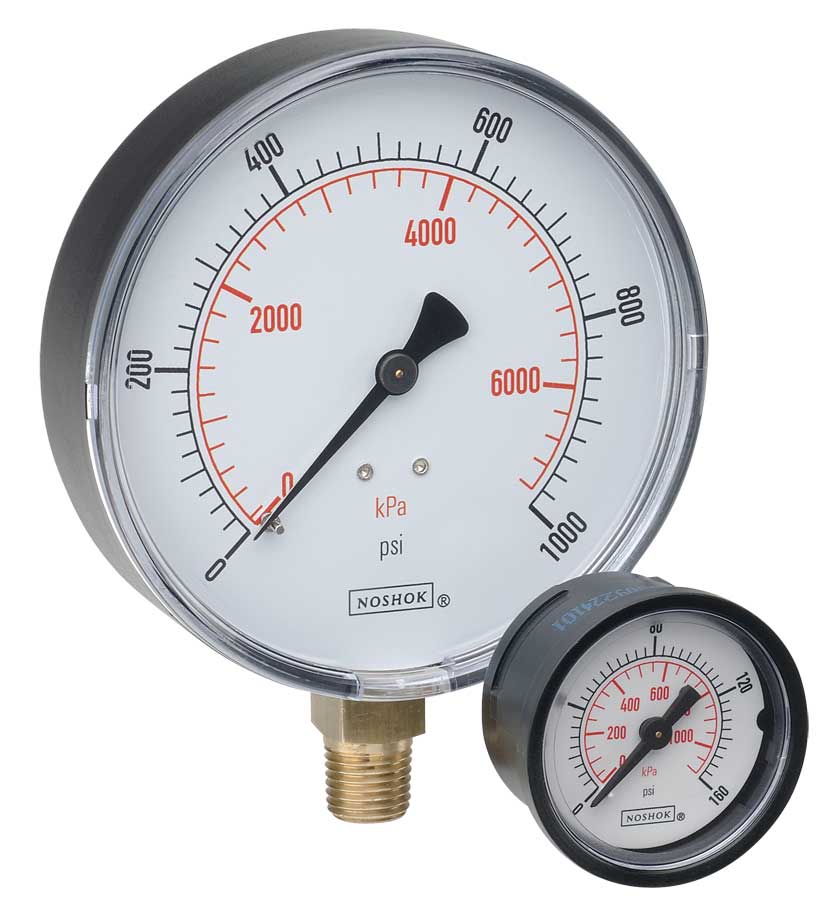 NOSHOK ABS & Steel Dry Pressure Gauges 100 series
 NOSHOK Low Pressure Dry Pressure Gauges-( 200 series)
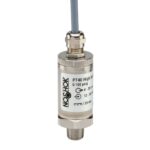 NOSHOK PT40 Series High Accuracy Transmitters-Replaces 100,200,615 series
