



Needle Valve vs Ball Valve for Process Control

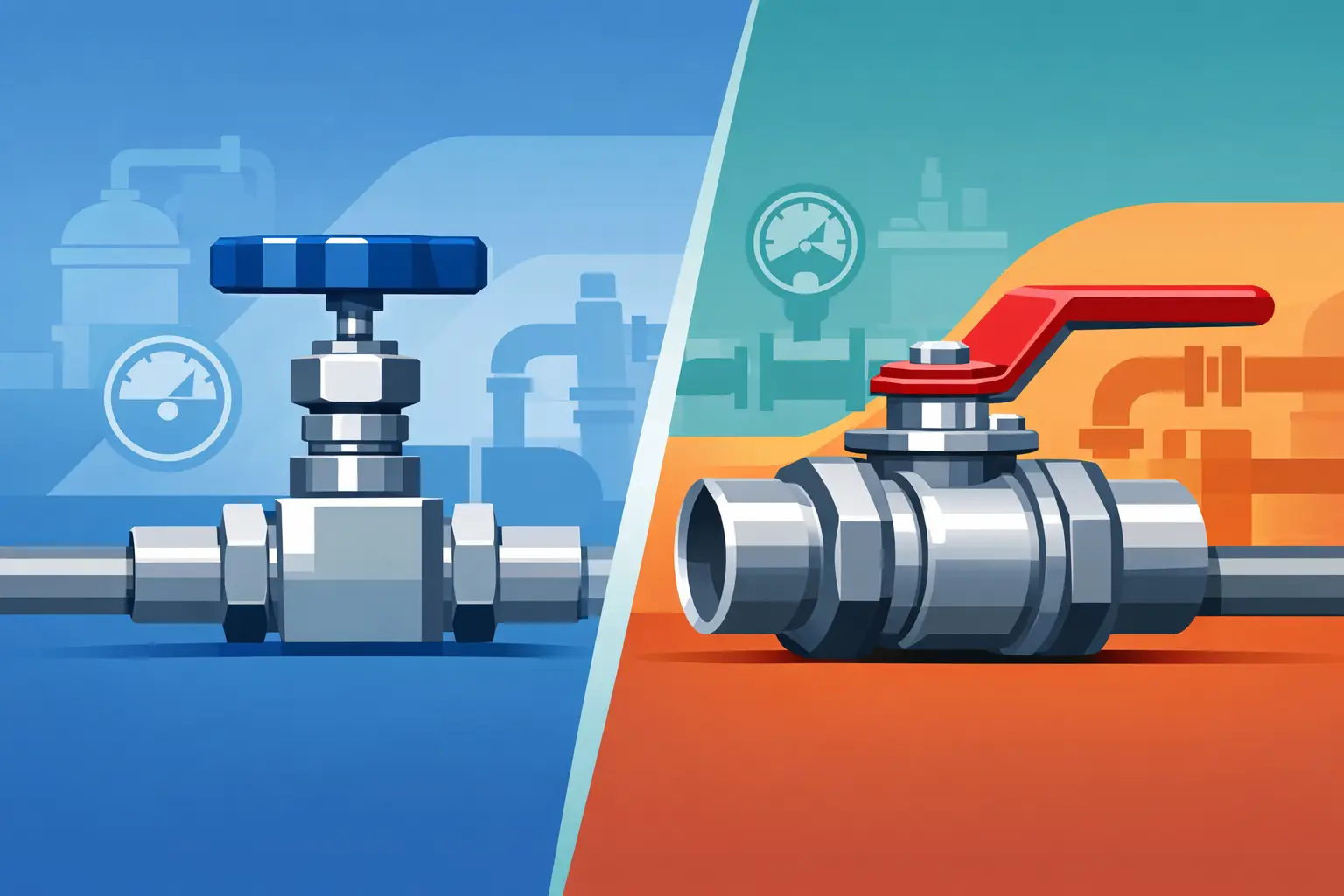
A valve that is correct for isolating a pressure gauge may be a poor choice for controlling a low flow rate. That distinction drives the needle valve vs ball valve decision. Both valve types can stop fluid flow, but their internal geometry, operating method, and intended duty are fundamentally different. Selecting by connection size alone can lead to unstable control, premature seat wear, leakage, or an instrument that cannot be safely serviced.
For instrumentation systems, the decision should start with function: Is the valve intended for positive on-off isolation, precise manual regulation, venting, or a combination of these tasks? Process medium, pressure, temperature, material compatibility, and connection configuration then determine the appropriate valve construction.
Needle Valve vs Ball Valve: The Basic Difference
A needle valve controls flow with a long, tapered stem tip that moves into and out of a matching seat. Turning the handle advances or retracts the stem gradually, creating a small and controllable flow path. This design provides fine manual adjustment, particularly where flow rates are low and incremental changes matter.
A ball valve uses a drilled ball that rotates inside the valve body. When the bore aligns with the flow path, the valve is open. A quarter-turn rotates the bore away from the flow path to close the valve. Full-port ball valves produce relatively low pressure drop when fully open, while reduced-port designs have a smaller internal passage.
The practical result is simple: a needle valve is generally selected for controlled restriction and fine adjustment; a ball valve is generally selected for fast, positive isolation. Either style may be used in an instrumentation assembly, but they perform different jobs within that assembly.
Flow Control and Shutoff Performance
Where a needle valve performs best
The tapered stem of a needle valve gives the operator a much larger number of turns over the useful adjustment range. That makes it suitable for metering small flows, damping pressure fluctuations, controlling purge gas, and making gradual pressure equalization changes. In a gauge installation, a needle valve can also isolate the instrument from process pressure while allowing controlled depressurization when the system design includes the proper venting arrangement.
Needle valves are not automatically interchangeable, however. Flow capacity varies substantially by orifice size, stem design, valve series, and pressure differential. A valve that offers excellent low-flow sensitivity may not provide the required Cv for a larger process line. Operating a small-orifice needle valve near its capacity can create excessive pressure drop, noise, or erosion.
Where a ball valve performs best
A ball valve is a strong fit when the requirement is open or closed service with minimal operator time. Its quarter-turn handle provides clear position indication and quick isolation of equipment, sample lines, and instrument branches. When fully open, the comparatively straight bore of a full-port design helps preserve flow capacity.
Ball valves are not normally the preferred choice for fine throttling. Small handle movements can make relatively large changes in flow area, especially near the closed position. Holding a conventional ball valve partially open can also expose seats and ball surfaces to accelerated wear in certain services. If throttling is necessary, the valve data should specifically support that duty rather than assuming every ball valve is suitable for control.
Selecting by Application, Not by Valve Name
The most reliable selection process begins with the operating task. A maintenance technician isolating a gauge for replacement usually benefits from a compact valve that can provide dependable shutoff. An engineer setting a purge flow to an analyzer or controlling the pressurization rate of an instrument line needs repeatable adjustment, which points toward a needle valve.
For pressure measurement installations, valve selection also affects the quality of the reading. A rapidly operated ball valve can expose a sensitive gauge or transmitter to an abrupt pressure change. A needle valve allows gradual pressurization, which can be useful during startup or when checking the response of an instrument. That does not eliminate the need for proper overpressure protection and rated components, but it gives the operator more control over the transition.
In many systems, the correct answer is not one valve type or the other. A ball valve may serve as the primary isolation valve, while a needle valve handles fine regulation, bleed-off, or controlled venting. Manifolds and purpose-built instrumentation valve assemblies can combine isolation and equalization functions in a compact configuration. The specified process connection, gauge connection, and required operating sequence should determine the arrangement.
Material, Pressure, and Temperature Requirements
Valve function is only part of the specification. The wetted materials must be compatible with the process medium. Stainless steel is widely used for industrial instrumentation because of its corrosion resistance and pressure capability, but it is not universally appropriate. Chlorides, sour service conditions, aggressive chemicals, high-purity media, and sanitary processes may require a specific alloy, polymer seat, cleaning standard, or sealing design.
Pressure rating must be verified for the complete valve configuration, not inferred from pipe size. Body material, seat material, end connection, temperature, and service conditions can all affect the allowable working pressure. A soft-seated ball valve may offer excellent shutoff for a compatible fluid within its published limits, while high-temperature service may call for a different seat material or valve design. Likewise, a needle valve stem packing and seat must be suited to the expected temperature and cycling frequency.
Do not overlook the difference between system pressure and differential pressure. A valve may be installed in a high-pressure system but see only a modest pressure drop during normal operation. During venting, startup, or upset conditions, that differential can change significantly. For needle valves in particular, differential pressure and flow velocity influence controllability and seat life.
Connections and Installation Details
Thread type and end configuration are frequent sources of field errors. NPT, tube fitting, compression, flange, and other connection styles are not interchangeable. Verify nominal size, male or female orientation, thread standard, and the tubing or piping connection method before ordering a replacement. An apparently similar valve can introduce a leakage path or require adapters that add unnecessary joints to an instrument line.
Valve orientation should also support operation and maintenance. A ball valve handle needs clearance for its full quarter-turn travel. A needle valve needs enough access for repeated adjustment without putting side load on tubing. Where a valve is used to protect a gauge or transmitter, place it where the operator can isolate the instrument without reaching across hot surfaces, rotating equipment, or hazardous process areas.
Installation practices matter as much as the valve selection. Use appropriate thread sealant for the medium and connection type, avoid over-tightening tapered threads, and support tubing so the valve body is not carrying vibration or line weight. After installation, perform the required leak check and functional test at conditions consistent with site procedures. A valve that seals at ambient test pressure may behave differently at operating temperature or under cycling service.
A Practical Specification Check
Before selecting a needle valve or ball valve, document the process fluid, operating and design pressure, temperature range, required flow or Cv, and the exact end connections. Define whether the valve must isolate, regulate, vent, equalize, or perform more than one function. Then confirm body material, seat and seal materials, pressure-temperature rating, handle style, and any compliance requirements tied to the plant or service.
For replacement work, compare the complete existing part specification rather than relying only on its general appearance. Instrumentation valves often differ in port size, stem tip, packing, connection geometry, and pressure rating even when their bodies look nearly identical. Mass Measure can help buyers identify NOSHOK instrumentation components by series and configuration when an exact replacement or compatible assembly is required.
A useful final check is to consider what happens when the valve is operated under real plant conditions. If the operator needs fast isolation, clear open-close status, and maximum flow when open, specify the ball valve accordingly. If the operator needs controlled flow adjustment or gradual pressurization, specify the needle valve with the required capacity and materials. That functional discipline prevents a small valve from becoming a large reliability problem.
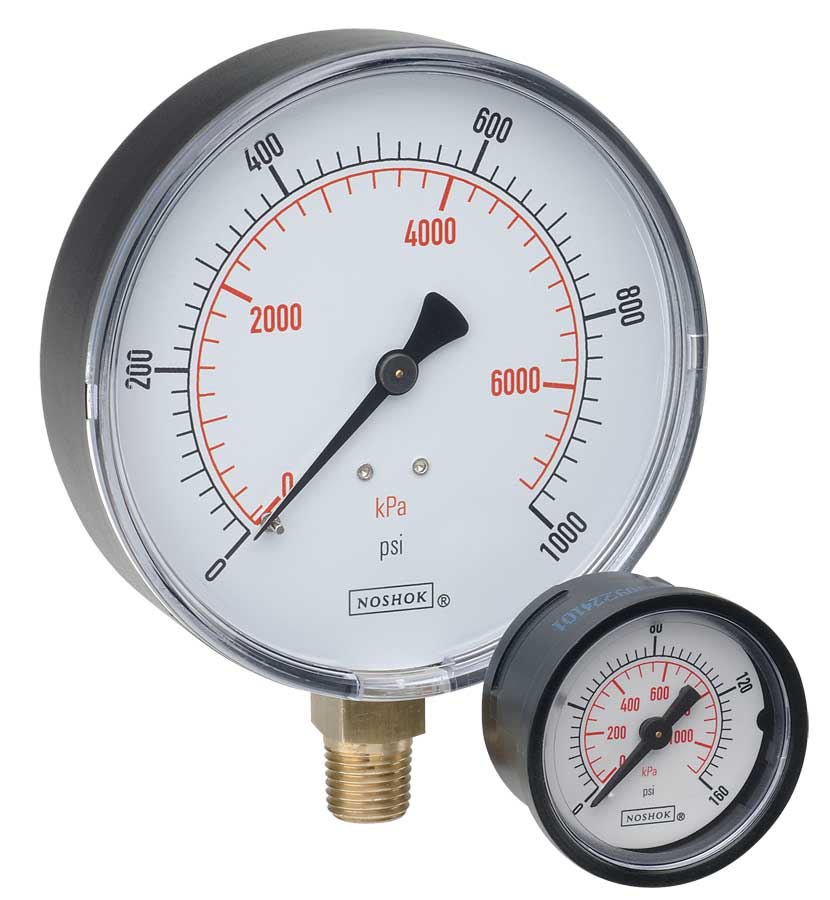 NOSHOK ABS & Steel Dry Pressure Gauges 100 series
 NOSHOK Low Pressure Dry Pressure Gauges-( 200 series)
 NOSHOK PT40 Series High Accuracy Transmitters-Replaces 100,200,615 series