

5 Things to Check in NOSHOK Wastewater Instrumentation

Last Updated: October 28, 2026
Quick Summary
Wastewater instrumentation is the set of pressure gauges, transmitters and related sensors used to monitor treatment plant processes, and choosing it means checking corrosion resistance, specifications, process connections and calibration needs. Corrosive media such as hydrogen sulfide, chlorides and abrasive solids attack standard parts, so materials must match the media. Calibration intervals should be set from measured drift rather than a fixed calendar.
- Specify wetted parts to match the media, since hydrogen sulfide, chlorides and solids attack standard materials.
- Confirm pressure range, accuracy, output signal and process connection before ordering any instrument.
- Set calibration intervals from measured drift, tracking as-found error, as-left error and drift direction.
- Replace rather than recalibrate critical taps where a gauge has failed twice.
- Match the transmitter output signal to the SCADA input card before purchase.
Table of Contents
- Why Wastewater Pressure Measurement Demands Corrosion-Resistant Instruments
- Pressure Gauge Specifications and Process Connection Types
- Choosing a NOSHOK Pressure Transmitter for Corrosive Wastewater Media
- Diaphragm Seals for Wastewater: When Isolation Is Worth It
- Wastewater Instrument Calibration, Accuracy, and Recalibration Intervals
- Connecting Instruments to SCADA and Maintenance Planning
- Frequently Asked Questions
Wastewater treatment plants run on wastewater instrumentation most people never think about until one fails. Choosing instrumentation for wastewater treatment involves technical checks. At Mass Measure, we’re a fully authorized NOSHOK distributor.
Why Wastewater Pressure Measurement Demands Corrosion-Resistant Instruments
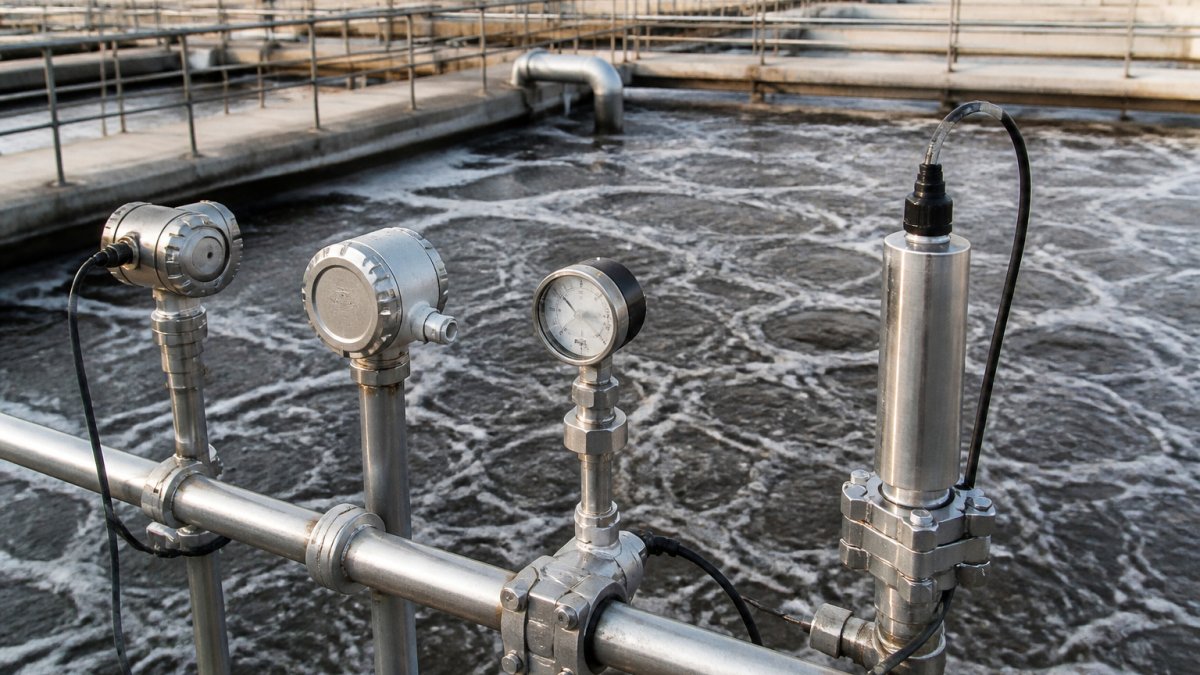
Wastewater is a hard environment for any wastewater instrumentation, and standard gear rarely lasts. Hydrogen sulfide, chlorides and abrasive solids attack standard wetted parts, and humid enclosures speed up corrosion at every fitting. A gauge that holds up in clean water service can fail within a season on a sewage lift station.
Specify materials for the media. Consider corrosion during instrument selection.
Pressure Gauge Specifications and Process Connection Types
Consider pressure range, accuracy, output signal and process connection. Accuracy and calibration requirements should match what your control loop needs.

Confirm the thread standard before ordering, and check whether a diaphragm seal or manifold sits between the gauge and the process.
Choosing a NOSHOK Pressure Transmitter for Corrosive Wastewater Media
For corrosive service, consider the transmitter’s wetted parts and the specific chemistry at the tap point.
Confirm the pressure range and process connection against your drawings before purchase.
Wetted Parts Material Selection and Chemical Compatibility
Consider the media the transmitter will encounter, including cleaning chemicals used during maintenance.
Environmental Protection Ratings: IP and NEMA for Lift Stations
Confirm the enclosure rating for the intended environment.
Diaphragm Seals for Wastewater: When Isolation Is Worth It
A diaphragm seal isolates the gauge or transmitter from the process fluid.
Wastewater Instrument Calibration, Accuracy, and Recalibration Intervals
Calibration keeps readings trustworthy, but the right interval depends on how harsh the service is. Corrosive or solids-laden media cause drift faster than clean water does, so a fixed annual schedule may be too loose for some points and too frequent for others. The practical fix is to set intervals from measured drift rather than from a calendar.
Set Intervals From Drift, Not From Habit
Track three numbers at every calibration: as-found error, as-left error, and the direction of drift. A gauge that consistently drifts the same way is telling you something about the process, pulsation, overpressure, or thermal cycling, and the fix may be a snubber, a different range, or a diaphragm seal rather than a tighter calibration schedule.
Replace vs. Recalibrate: A Decision Framework
On critical lift-station and digester taps, err toward replacement sooner. A gauge that has failed twice is a reliability risk, and the process upset from a bad reading usually costs more than the instrument.
Documentation and Records
Keep calibration certificates on file for every instrument, tied to its tag number, range, and process connection. In the United States, plant records are commonly reviewed against internal quality programs and, where applicable, state-issued discharge permits that require measurement integrity for flow and pressure instrumentation. Mass Measure offers repair and calibration services, which can turn a failing gauge around faster than a full replacement in many cases, but the replace-vs-recalibrate call above should drive the decision, not convenience. Maintaining these rigorous documentation standards provides the necessary foundation for integrating water quality intelligence into broader facility management strategies.
When to Shorten the Interval
Shorten the cycle immediately after any of these events: a sensor exposed to a chemical cleaning agent outside its compatibility range, a freeze event on an outdoor line, a documented overpressure surge, or a process change that introduces new H2S or solids loading. Each of these can shift drift behavior faster than normal service, and the next calibration is the only way to confirm the instrument still reads true.
The right calibration interval depends on how harsh the service is, and the article’s guidance points to a few clear decision points.
| Situation | Recommended action | Reason |
|---|---|---|
| Corrosive or solids-laden media | Shorten the interval | Drift happens faster than in clean water |
| Record each calibration | Track as-found, as-left and drift direction | Reveals process causes of drift |
| Gauge failed twice on a critical tap | Replace rather than recalibrate | Reliability risk and costly process upset |
| Chemical cleaning outside compatibility range | Recalibrate immediately | Can shift drift behavior quickly |
| Freeze event on an outdoor line | Recalibrate immediately | Can shift drift behavior quickly |
| Documented overpressure surge | Recalibrate immediately | Can shift drift behavior quickly |
| New H2S or solids loading | Recalibrate immediately | Can shift drift behavior quickly |
Connecting Instruments to SCADA and Maintenance Planning
Instrument data is only useful when it reaches the control system and the maintenance team. The gap between a working transmitter and a working SCADA point is usually one of four things: signal type, loop power, wiring scheme, or tag discipline. Confirm all four before ordering, and the integration becomes routine.
Match the Signal to the Input Card
Most NOSHOK pressure transmitters in wastewater service output either a 4-20 mA analog signal or a voltage signal, and the choice has to match the SCADA input card. A 4-20 mA loop is the default for long cable runs because it is current-based and resistant to voltage drop; a 0-5 V or 0-10 V output is common on shorter runs and on transmitters feeding a local controller. Confirm the output before you buy, a 4-20 mA transmitter wired to a voltage input card will not read correctly, and the fix is a new card or a signal converter, not a calibration.
Loop Power and Wiring
Two-wire 4-20 mA transmitters draw their power from the same loop that carries the signal, which simplifies wiring but means the loop supply must be sized for the transmitter’s minimum operating voltage plus the voltage drop across the cable and any isolators. Three-wire and four-wire transmitters have separate power and signal conductors and are common where the SCADA cabinet supplies 24 VDC directly. Check the transmitter datasheet for its minimum loop supply and confirm the cabinet can deliver it at the far end of the run, not just at the terminals.
Tag, Range, and Calibration Data in One Place
Record each instrument’s tag number, pressure range, process connection, output signal, and last calibration date in the same system the maintenance team uses. The tag on the instrument, the tag in the SCADA database, and the tag on the calibration certificate should match exactly, mismatches are the most common cause of a technician calibrating the wrong point or a work order closing against the wrong asset.
Alarm Setpoints and Maintenance Triggers
SCADA is more than a display. Configure alarm setpoints on pressure transmitters at lift stations and aeration lines so a drift or blockage triggers a work order before it becomes a process upset. A common pattern is a high-high and low-low alarm on each critical pressure point, with the alarm routed to the maintenance queue rather than only to the operator screen. Tie calibration due dates to the same maintenance planning software so technicians see them in the normal work queue, and let the SCADA trend history feed the drift analysis described in the calibration section above.
Integration Checklist Before Ordering
- Output signal matches the SCADA input card (4-20 mA, 0-5 V, or 0-10 V).
- Loop supply voltage is sufficient at the transmitter terminals under load.
- Wiring scheme (two-, three-, or four-wire) matches the cabinet design.
- Tag number, range, and process connection are recorded in the asset system.
- Alarm setpoints and calibration due dates are configured in SCADA and maintenance planning.
Frequently Asked Questions
What pressure instrumentation is used in wastewater treatment?
Wastewater plants typically use pressure gauges for local reading, pressure transmitters for sending signals to a control system, and diaphragm seals where media could clog or corrode the sensing element. Pressure measurement is used across pump discharge lines, filter differential pressure, aeration headers, and sludge handling. Choosing among these depends on whether you need a local reading or remote monitoring, and on how aggressive the process fluid is. Current pricing and availability are on our website or available through a quote.
How do you choose a pressure transducer for wastewater applications?
Start with the pressure range and the media. Confirm wetted parts materials, such as 316L stainless steel, are compatible with the chemicals and solids in your stream. Check the enclosure rating for washdown and humid areas, typically IP67 or NEMA 4X, and confirm the output signal matches your PLC or SCADA input. Specify the process connection and the accuracy class you need.
When should a diaphragm seal be used in wastewater service?
Use a diaphragm seal when the process fluid is corrosive, viscous, contains solids, or can freeze or crystallize in the impulse line. The seal isolates the transmitter from the media so the sensing element stays clean and the line does not plug. Mass Measure supplies NOSHOK diaphragm seals.
How often should wastewater pressure instruments be calibrated?
Calibration frequency depends on the process criticality, the instrument’s stability history, and your site’s quality procedures. Many facilities check critical transmitters on a fixed interval and adjust based on observed drift. Record as-found and as-left readings so you can see drift trends over time. Mass Measure offers repair and calibration services to support the full instrument lifecycle.
Choosing the right instrument is the first step. Send us your process conditions, connection types and media details, and our team will recommend NOSHOK models that fit your application. Contact Mass Measure to request a quote on your wastewater instrumentation needs.

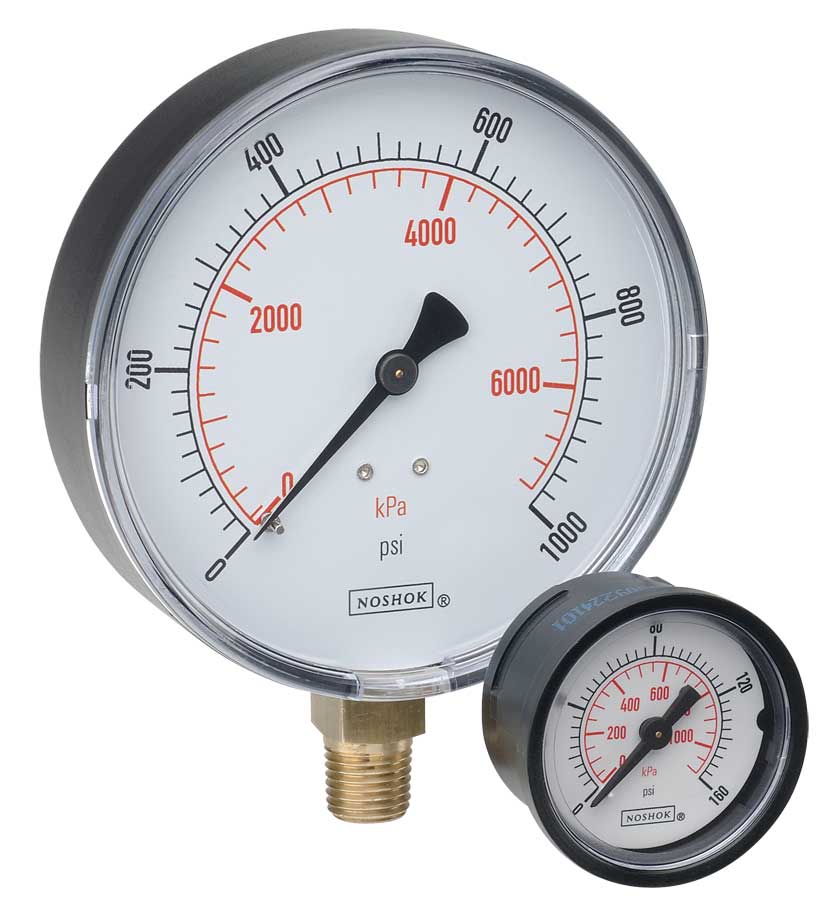 NOSHOK ABS & Steel Dry Pressure Gauges 100 series
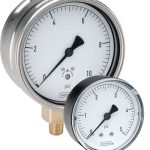 NOSHOK Low Pressure Dry Pressure Gauges-( 200 series)
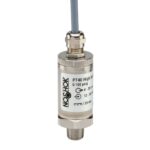 NOSHOK PT40 Series High Accuracy Transmitters-Replaces 100,200,615 series
