



Identifying Legacy NOSHOK Part Numbers: 2026 Guide

Table of Contents
- Why Legacy NOSHOK Part Numbers Get Hard to Read
- Step 1: Locate the NOSHOK Instrument Nameplate Identification Data
- Step 2: Break the Code Into Its Segments
- Step 3: Run a NOSHOK Part Number Lookup Against the Catalog
- Decoding NOSHOK Pressure Gauge Part Numbers: Worked Examples
- Legacy-to-Current Cross-Reference and Replacement Cautions
- Verify Before You Order
- Frequently Asked Questions
Last Updated: October 21, 2026
Why Legacy NOSHOK Part Numbers Get Hard to Read
Identifying legacy NOSHOK part numbers starts with one hard truth: the code on an old gauge was never meant to be read by a stranger.
At Mass Measure, we handle these lookups daily. The pattern is always the same.
Three things make legacy codes hard to crack:
- Stamp wear. Metal tags corrode in washdown and coastal plants.
- Nomenclature drift. Manufacturers rename and renumber series over time.
- Missing paperwork. The original purchase order is long gone.
Below, we walk through a step-by-step method for decoding a legacy NOSHOK part number, with worked examples and a cross-reference check before you buy.
Step 1: Locate the NOSHOK Instrument Nameplate Identification Data
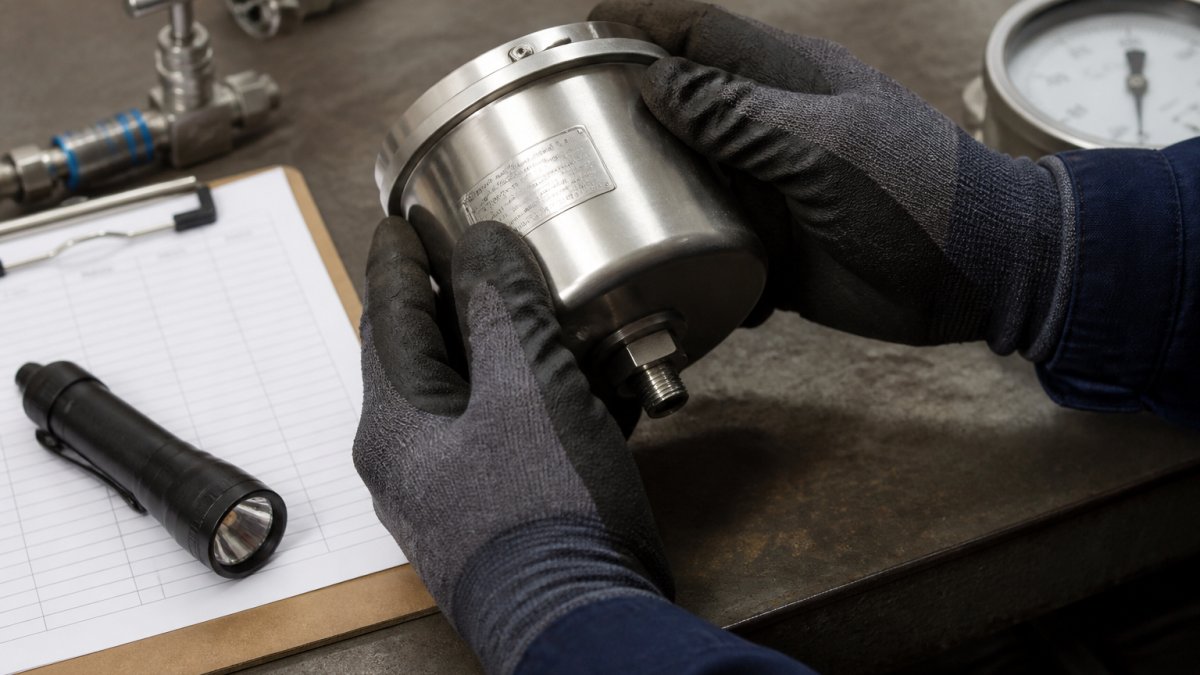
The first move is finding the actual nameplate, not guessing from the box or the invoice. NOSHOK instrument nameplate identification data lives on a metal tag or etched plate fixed to the instrument.
That tag is your source of truth. Everything else is a rumor.
Where the Tag Sits on Gauges, Transmitters, and Valves
Placement varies by product family:
- Pressure gauges: tag on the case side or rear flange, sometimes under the bezel ring.
- Transmitters: etched plate on the housing body, often opposite the conduit entry.
- Needle valves: stamping on the valve body, frequently on the hex flat.
Wipe the tag clean and use a bright light at a low angle. Raised stamping reads best when light rakes across it.
What to Do When the Label Is Missing or Unreadable
A common mistake is ordering from a partial guess. That is how wrong parts ship.
When the tag is gone, work from physical evidence instead:
- Measure the dial diameter and connection size with calipers.
- Note the connection location (bottom or back).
- Check the case material and whether it is liquid-filled.
Never order a replacement from a partial part number. A single wrong character in the connection or range segment ships a gauge that will not fit or will not read correctly, and you lose another production day.
Step 2: Break the Code Into Its Segments
A NOSHOK part number is a compressed build record. Read it left to right, one segment at a time, and each block answers a single question about the instrument. The goal is not to memorize the whole code at once; it is to isolate the series first, then confirm each downstream segment against the physical gauge.
Most legacy codes follow a sequence like this:
| Segment | What It Tells You | Typical Values |
|---|---|---|
| Series | Product family and case style | Gauge, transmitter, valve series |
| Pressure range | Span and units | psi, bar, compound (vacuum plus pressure) |
| Gauge size | Dial diameter | 1.5 in, 2 in, 2.5 in, 4 in |
| Connection type | Thread standard | NPT, SAE |
| Connection location | Port position | Bottom, back (center back or lower back) |
| Case material | Housing and internals | Brass, stainless steel |
| Fill | Liquid-filled or dry | Glycerin-filled, dry |
Series, Pressure Range, and Gauge Size
The series block is the anchor. It tells you the product family and often the case style. Get this wrong and everything downstream is wrong. A common pattern is a short alphanumeric prefix that maps to a family, followed by a numeric range block.
The pressure range segment defines the fixed span and units. Watch for compound ranges, which read both vacuum and pressure, and for ranges expressed in bar rather than psi.
Connection Type, Location, and Case Material
Connection details cause the most returns. NPT connection and SAE connection threads are not interchangeable. Bottom connection and back connection gauges mount differently, and a back-connect unit will not drop into a bottom-connect bracket.
Case material and internals matter too. Brass case and stainless steel options behave very differently in corrosive service, and copper alloy internals are common in general-purpose gauges but not in every wetted-material spec.
A Worked Decode, Segment by Segment
Take a legacy code that reads as a short series prefix, a range block, a size block, a connection block, and a fill block. Decode it in this order:
- Series: match the prefix to the catalog family. Confirm the case style in the catalog photo matches the physical gauge.
- Range: read the numeric block as the fixed span and confirm the units printed on the dial face. If the dial says compound, the code should show a vacuum-plus-pressure range.
- Size: match the size block to the measured dial diameter with calipers. A 4 in dial measures about 4 in across the bezel, not the case body.
- Connection: confirm NPT versus SAE and bottom versus back. Check the port position against the mounting bracket.
- Fill: confirm whether the case is liquid-filled or dry. A glycerin-filled case has a fill plug and visible liquid; a dry case does not.
If any segment disagrees with the physical instrument, stop and re-read the tag. A single wrong character in the connection or range segment ships a gauge that will not fit or will not read correctly.
Photograph the connection threads next to a ruler before you call for a lookup. Thread pitch is the detail most often misread from a photo, and a scale reference settles it in seconds.
Step 3: Run a NOSHOK Part Number Lookup Against the Catalog
A NOSHOK part number lookup is only as good as the document you check it against.
Here is the sequence we use:
- Match the series segment to the catalog family.
- Confirm the pressure range appears in that family’s options.
- Cross-check gauge size, connection, and case material.
- Note the manufacturer part number (MPN) exactly as printed.
- Flag any segment the catalog no longer lists.
That last step matters. A discontinued segment is a signal, not a dead end. It usually means the series was renamed or the option was folded into a new family.
For verification, compare against NOSHOK’s official product documentation and any published industry guidance on pressure instrument selection that governs your application.
Decoding NOSHOK Pressure Gauge Part Numbers: Worked Examples
NOSHOK pressure gauge part numbers decode fastest when you work a real example. Here are two patterns we see often.
Example 1: A 4-inch bottom-connect gauge.
The series block identifies the gauge family. The range block reads as a fixed pressure span in psi. The size block points to a 4-inch dial, and the connection block confirms a bottom NPT port.
Example 2: A 2.5-inch back-connect, liquid-filled unit.
Here the size block reads smaller, the connection block shows a back port, and a fill segment confirms glycerin-filled construction. That fill matters in high-vibration service, where a dry gauge needle would flutter and fail early.
A quick way to sanity-check any decoded code:
- Does the dial size match the physical instrument?
- Does the connection location match the port you see?
- Does the range match the gauge face printing?
If any answer is no, the decode is wrong somewhere.
Legacy-to-Current Cross-Reference and Replacement Cautions
Legacy-to-current cross-reference is where good intentions go wrong. A newer series may look identical but differ in wetted materials, range steps, or connection thread. The fix is a repeatable mapping method, not a guess from a photo.
Build a Cross-Reference Record
For every legacy part you need to replace, capture the same five fields before you search:
- Legacy MPN exactly as stamped, including any suffix.
- Series and case style from the catalog family page.
- Pressure range and units as printed on the dial.
That record is your cross-reference key. Without it, a match on series alone is only half a match.
Map Legacy to Current in Four Steps
- Match the series family first. Find the current family that shares the legacy form factor, mounting, and case style. If the family was renamed, the catalog usually lists the old name in the family description or a discontinued-products note.
- Confirm the range is still offered. A legacy range may now sit between two current steps. If the exact span is gone, the nearest current step is a candidate, but it is not a confirmed replacement until the application tolerance is checked.
- Confirm connection type and location. NPT and SAE are not substitutes. Bottom and back are not substitutes. Center-back and lower-back are not substitutes without the matching bracket.
- Confirm materials and fill. A dry gauge replacement in a vibrating line will not last. A brass case in corrosive service will not last. Match the wetted materials to the service, not just the form factor.
Replacement Cautions
Watch these traps:
- Renamed series. The family changed names but kept the same form factor. Confirm the current family page lists the legacy name or a discontinued note.
- Range changes. A legacy range may now sit between two current steps. Do not assume the nearest step is acceptable without checking the application’s tolerance.
- Thread differences. NPT and SAE are not substitutes. Verify thread standard and size against the port, not the photo.
Verify Against Official Documentation
A cross-reference is only confirmed when it is checked against the current catalog and the physical instrument. Use the current catalog and the official product specification sheets, not a reseller’s summary page. Note the manufacturer part number (MPN) exactly as printed, and flag any segment the catalog no longer lists.
For verification, compare against NOSHOK’s official product documentation and any published industry guidance on pressure instrument selection that governs your application.
Always confirm the replacement against the current catalog and the physical instrument. A cross-reference that matches on series alone is only half a match.
Verify Before You Order
Verification is the step that saves the production day.
Then check availability and list price against a live source, not last year’s quote.
At Mass Measure, we are a fully authorized distributor of the complete NOSHOK line.
If you are unsure about a legacy code, send us the nameplate photo and the physical measurements. We will confirm the part before anything ships.
Frequently Asked Questions
How do I identify an older NOSHOK part number?
Start with the nameplate on the instrument itself. Legacy NOSHOK part numbers are built from segments that describe the product series, pressure range, gauge size, connection type and location, and case or wetted materials. Photograph the tag, write the string down exactly as printed, then split it into those segments and match each one against the current catalog. If a segment does not match anything listed, the series may be discontinued, so ask an authorized distributor to confirm before you order a replacement.
Can an older NOSHOK part number be matched to a current model?
Often yes, but not automatically. NOSHOK part number lookup works best when you compare each segment rather than the whole string, because nomenclature has changed over the years and some series have been retired. A current equivalent may differ in case material, connection location, or whether the gauge is liquid-filled or dry. Confirm the pressure range, dial diameter, connection size and type, and wetted materials all line up before treating a current number as a drop-in replacement.
What should I do if a NOSHOK part number is missing or unreadable?
Measure what you can and document it. Record the dial diameter, the connection size and type, whether the connection is bottom or back, the pressure range in psi, and the case material. Note whether the gauge is dry or liquid-filled, and photograph any partial stamping or tag remnants. With those details an authorized distributor can narrow the series and confirm the correct replacement part number against official documentation rather than guessing from a partial string.
What information should I provide when asking about a legacy NOSHOK part?
Send the full part number as printed, a clear photo of the nameplate, and the application details: media, operating pressure, temperature, and whether the location is corrosive or high-vibration. Add the quantity you need and any deadline. If the number is incomplete, include your measurements and the original purchase records if you have them. That combination lets a distributor verify the series, check availability, and quote accurately instead of working from a partial match.
Legacy part numbers get harder to read every year, and a wrong guess costs production time you cannot get back. Mass Measure takes the guesswork out of the process with authorized NOSHOK sourcing, verified part numbers, and in-stock availability for bulk orders. Our team also handles repair and calibration so your existing instruments stay in service. Contact us with your nameplate photo and measurements, and we will confirm the right part before you order.
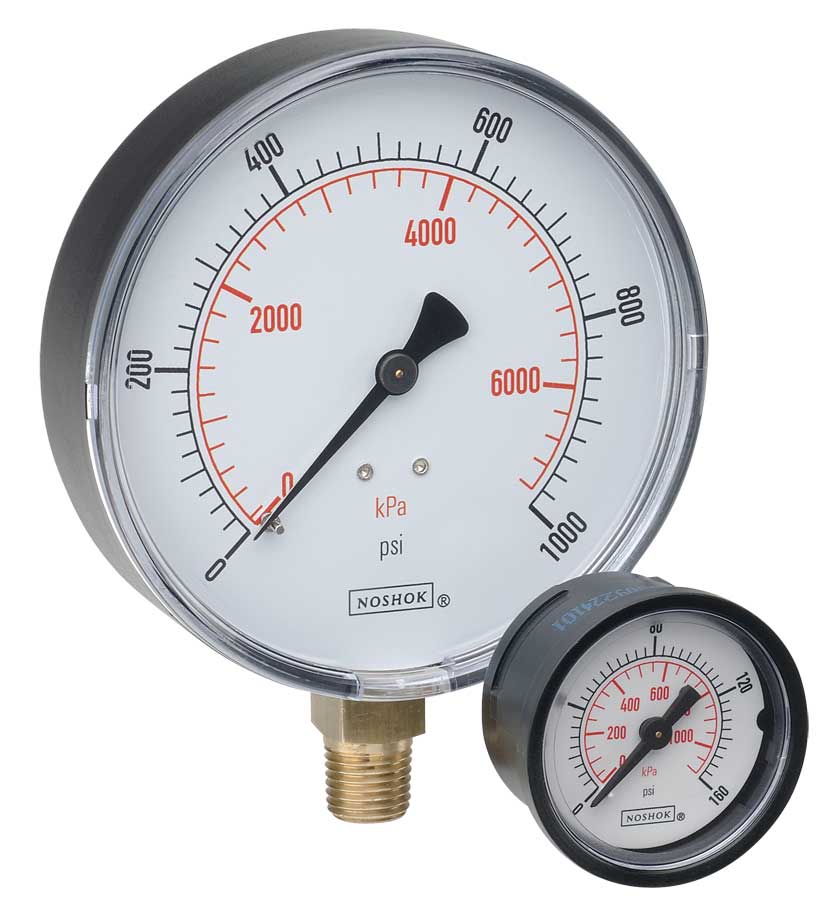 NOSHOK ABS & Steel Dry Pressure Gauges 100 series
 NOSHOK Low Pressure Dry Pressure Gauges-( 200 series)
 NOSHOK PT40 Series High Accuracy Transmitters-Replaces 100,200,615 series
