



Wireless Pressure Sensing for Industrial Systems

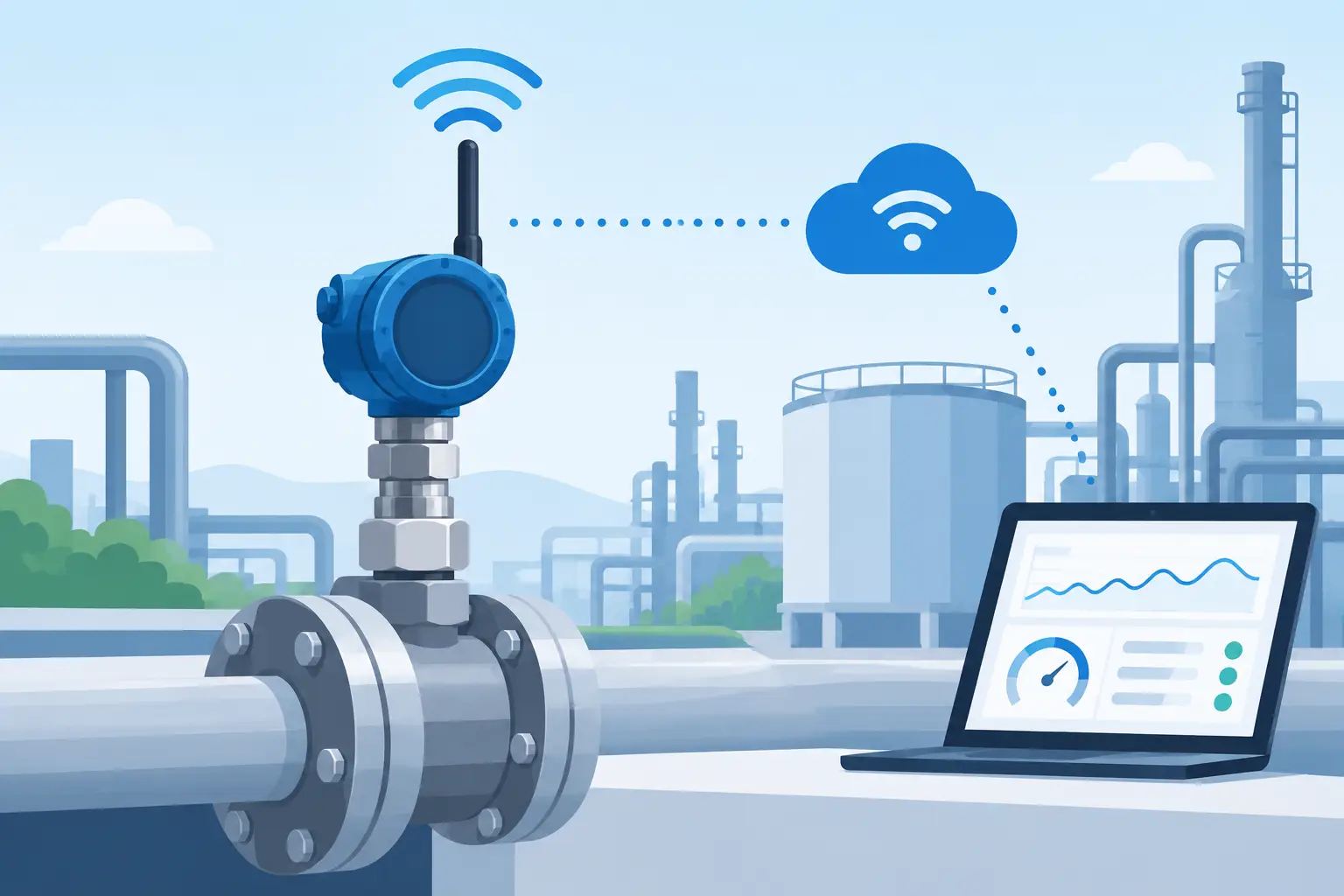
A pressure point can be critical without being conveniently located. Remote well pads, rotating equipment, temporary test setups, tank farms, and long pipe runs often have pressure data that is checked manually because installing conduit, power, and signal wiring is expensive or disruptive. Wireless pressure sensing can extend measurement coverage in these locations, but it does not remove the normal requirements of pressure instrumentation. Range selection, wetted materials, process connection, accuracy, overpressure capability, and installation quality still determine whether the measurement can be trusted.
For industrial users, the question is not simply whether a pressure transmitter can communicate wirelessly. The more useful question is whether a wireless architecture provides actionable data at the required reliability, update rate, and lifecycle cost for a particular process.
Where Wireless Pressure Sensing Fits
Wireless pressure sensing is most effective when the cost or difficulty of a wired installation exceeds the value of a continuous wired signal. This commonly occurs at distributed assets, infrequently monitored pressure points, and sites where routing cable requires trenching, classified-area planning, shutdown work, or structural modifications.
Typical applications include monitoring discharge pressure on auxiliary pumps, differential pressure across remote filtration equipment, blanket gas pressure on storage vessels, line pressure on temporary production equipment, and utility pressure at distant plant locations. It can also be useful during commissioning, troubleshooting, or reliability programs when a team needs trend data before deciding whether to make a permanent control-system modification.
That distinction matters. A wireless device may be a strong fit for condition monitoring and alarm notification, while a hardwired transmitter remains the appropriate choice for a fast control loop or a protective function with strict response and availability requirements. The required consequence of failure should drive the architecture, not the convenience of installation alone.
The Measurement Assembly Still Comes First
A radio does not correct a poorly specified pressure instrument. Before selecting a wireless node, define the complete measurement assembly from the process connection to the receiving system.
Pressure range and normal operating point
Select a range that places normal operating pressure in a meaningful portion of the instrument span while accommodating expected pressure excursions. A range that is excessively high may reduce useful resolution. A range that is too close to normal operating pressure can expose the sensor to repeated overloads and shorten service life.
The pressure type must also match the process requirement. Gauge pressure is referenced to atmospheric pressure, absolute pressure is referenced to vacuum, and differential pressure measures the difference between two process points. Confusing these references creates incorrect data even when the device is functioning correctly.
Wetted materials and process compatibility
The process media determines wetted material requirements. Stainless steel may be suitable for many general industrial services, but corrosive chemicals, high-chloride environments, sanitary fluids, viscous materials, oxygen service, and sour gas applications can require different material selections, cleaning practices, or isolation methods.
A diaphragm seal may be necessary where the process is hot, plugging, corrosive, sanitary, or likely to damage the sensing element. The seal fill fluid, diaphragm material, capillary length, and temperature range then become part of the measurement specification. Wireless communication does not reduce the need to engineer these details.
Connection and mechanical installation
Confirm the connection standard, size, orientation, and pressure rating at the process point. NPT connections are common, but flange, sanitary clamp, tube fitting, and other connection styles may be required. A correct electrical or wireless specification does not compensate for a mismatched process port.
Mechanical vibration and pressure pulsation require particular attention. A transmitter mounted directly on a reciprocating pump discharge can see conditions that differ substantially from a nearby gauge connection. Snubbers, restrictors, remote mounting, suitable manifolds, and properly supported impulse lines may be required to protect the sensor and improve signal stability.
Choosing the Wireless Architecture
The communications method must be evaluated as part of the plant system rather than as a standalone product feature. Signal range on a product sheet is not the same as usable coverage through steel structures, process units, concrete walls, electrical rooms, or terrain changes.
Industrial wireless systems may use a gateway-based network, a mesh arrangement in which devices relay data, a private radio system, or a cellular connection. Each approach has different implications for power use, network ownership, security, data routing, and maintenance.
A gateway-based or mesh system can work well within a plant where coverage can be surveyed and managed. Cellular-connected devices can be practical at isolated locations, but they introduce carrier coverage, account management, antenna placement, and recurring service considerations. For either approach, verify how data reaches the historian, SCADA platform, maintenance system, or other intended destination.
Protocol compatibility should be decided before procurement. Determine whether the receiving system requires a particular industrial protocol, an application programming interface, a local display, or cloud-based access. Also establish who will own gateway configuration, device commissioning, user permissions, firmware updates, and cybersecurity procedures after installation.
Update Rate, Battery Life, and Data Value
Wireless instruments operate within a practical trade-off: more frequent updates generally consume more power. A pressure point checked every hour for asset health does not need the same reporting interval as a point used to identify a rapidly developing pump problem.
Start with the decision the data must support. For slow-moving tank or utility pressure, a periodic update and exception-based alarm may be sufficient. For dynamic process conditions, an infrequent sample can hide excursions, pulsation, or short-duration events. In those cases, a wired transmitter, local data logger, or different sensing approach may be more appropriate.
Battery-life estimates should be treated as operating assumptions, not guarantees. Reporting interval, transmit power, ambient temperature, signal quality, retries, alarm traffic, and sensor operating mode all affect actual battery life. A device located at the edge of network coverage may use more energy maintaining communication than a comparable device with a clear path to the gateway.
Specify how low-battery status is communicated and who is responsible for replacement. A maintenance plan should include spare batteries or power modules, installation records, expected replacement windows, and safe access requirements. If battery replacement requires a lift, shutdown coordination, or classified-area work, that cost belongs in the lifecycle calculation.
Reliability and Safety Requirements
Wireless pressure sensing should be designed around the consequences of missing, delayed, or inaccurate data. A pressure alarm used for routine maintenance awareness has a different requirement than one associated with personnel safety, environmental release, or equipment protection.
For critical functions, review the complete signal path: sensor measurement, device diagnostics, radio transmission, gateway operation, power availability, receiving software, alarm configuration, and operator response. A displayed value is not proof that every failure mode has been addressed.
Hazardous-area classification is equally specific. Verify that the transmitter, wireless electronics, battery system, antenna, and installation method are suitable for the classified location. Approval markings, temperature code, enclosure rating, installation instructions, and local site requirements must align. Do not assume that an instrument approved for one area classification is acceptable for every hazardous location.
Cybersecurity is also an operating requirement. Use documented device identity, controlled access, encrypted communications where supported, network segmentation, and a managed process for firmware and configuration changes. A wireless measurement network should be administered with the same discipline applied to other plant-connected assets.
A Practical Specification Process for Wireless Pressure Sensing
A disciplined specification prevents the common mistake of selecting a radio feature first and discovering process incompatibilities later. Begin by documenting the measured medium, normal and maximum pressure, temperature, pressure reference, required accuracy, connection type, wetted materials, and hazardous-area classification. Then define the data requirement: update interval, alarm behavior, acceptable communication delay, required history, and receiving system.
Next, conduct a site survey. Confirm available network coverage at the intended mounting location, not merely at ground level or near a control room. Account for installed steel, moving equipment, seasonal vegetation, weather exposure, and antenna orientation. If the installation is temporary, confirm whether the temporary location changes the network path or mounting requirements.
Finally, establish the maintenance model. Identify the tag convention, calibration interval, battery strategy, spare instrument requirements, and failure response. The instrument should be traceable in the same way as a wired pressure transmitter, including range, serial number, configuration, installation date, and verification records.
Mass Measure supports industrial buyers who need to match pressure instrumentation to exact process and connection requirements, including the gauges, transmitters, manifolds, valves, seals, and accessories surrounding the measurement point. For a wireless project, that component-level review is often what determines whether the installed system produces stable, maintainable pressure data.
When Wired Instrumentation Remains the Better Choice
Wireless is not automatically the lowest-risk option. A wired installation is usually preferable where the pressure signal supports closed-loop control, requires high-speed response, must meet a defined safety integrity function, or is located near existing cable infrastructure. It may also be the simpler choice when the device needs local continuous power, the radio path is unreliable, or site policy limits wireless networks.
The strongest wireless installations are selected for a defined operational problem: a pressure point that is costly to visit, difficult to wire, or currently untrended. Specify the process measurement first, validate the communications path second, and assign ownership for the device over its full service life. That approach turns remote pressure data into a maintained industrial measurement rather than another unverified point on a dashboard.
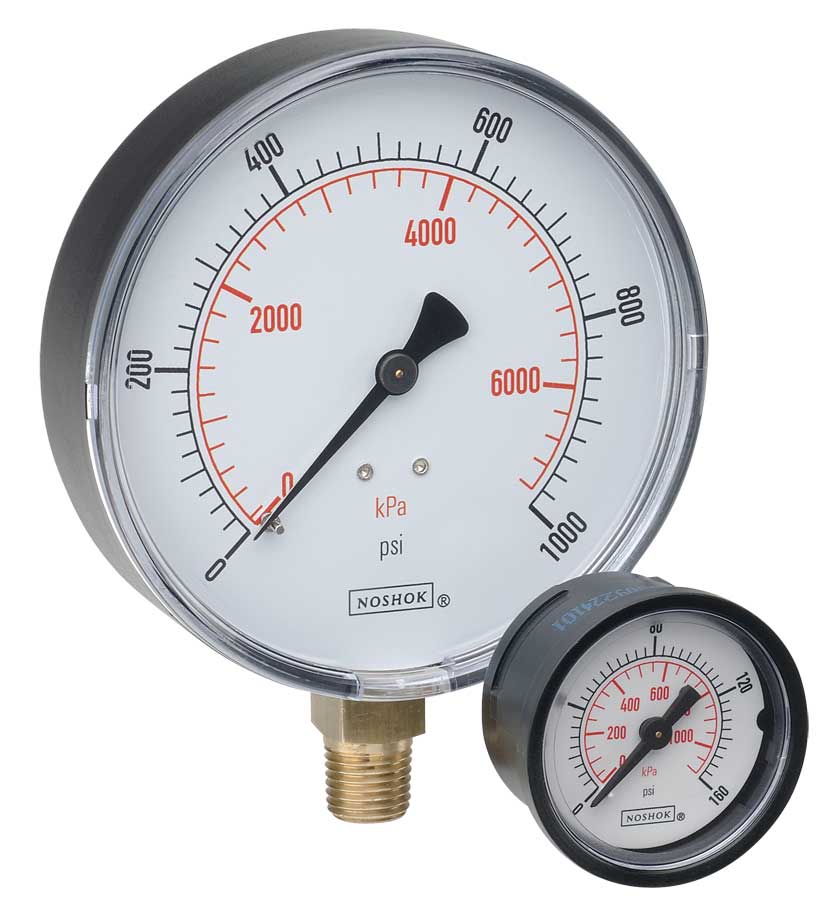 NOSHOK ABS & Steel Dry Pressure Gauges 100 series
 NOSHOK Low Pressure Dry Pressure Gauges-( 200 series)
 NOSHOK PT40 Series High Accuracy Transmitters-Replaces 100,200,615 series
