



Choosing Stainless Steel Pressure Gauges

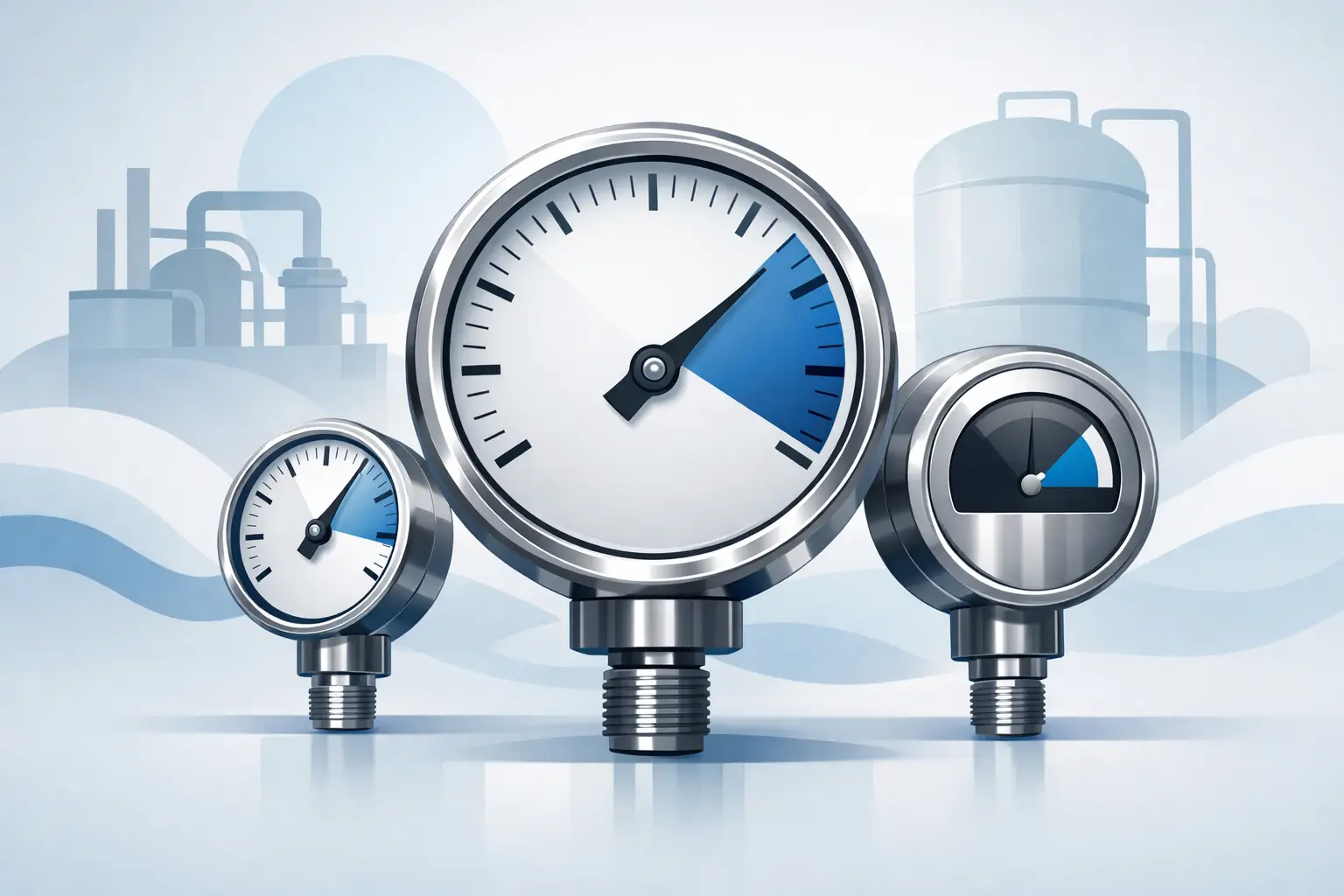
A pressure gauge that looks interchangeable on the shelf can fail quickly once it is exposed to vibration, washdown, pulsation, or corrosive media. That is why stainless steel pressure gauges are specified so often in industrial service. For maintenance teams, OEMs, and procurement groups, the real question is not whether stainless construction is preferable. It is which gauge configuration matches the process, the pressure profile, and the installation standard already in place.
Why stainless steel pressure gauges are specified
In industrial instrumentation, stainless steel is usually selected for one reason – service conditions are not forgiving. Carbon steel cases and lower-grade internal components may be adequate in light-duty utility applications, but they tend to become a weak point when moisture, chemical exposure, outdoor installation, or frequent pressure cycling are involved.
Stainless steel pressure gauges are commonly chosen because the case holds up better in washdown and corrosive environments, and stainless wetted parts improve compatibility with a wider range of media. That distinction matters. A stainless case alone does not mean the process-contacting components are stainless. Buyers should separate case material from wetted material every time they review a part number.
For many applications, the value is not just corrosion resistance. It is service life, legibility, and reduced replacement frequency. In plants where gauges are mounted across skids, compressors, pumps, hydraulic systems, and process lines, premature gauge failure creates more than a maintenance nuisance. It creates uncertainty about the process condition.
Case material vs wetted parts
This is where selection errors happen most often. A buyer may request a stainless steel gauge and receive a unit with a stainless case but a brass tube and connection. That may be acceptable for air, water, hydraulic oil, or other non-corrosive media. It may be the wrong choice for chemical service, aggressive washdown, or installations where media compatibility requires all stainless wetted components.
A proper review starts with the wetted path. That includes the socket, bourdon tube, and any internal components exposed to the process media. If the application involves corrosive fluids, steam, high-purity service, or compatibility concerns, all-welded stainless wetted construction is often the safer specification.
Case design matters as well. Solid-front safety pattern gauges are often preferred where higher operating pressures or more demanding industrial standards apply. In less severe service, a general-purpose stainless case gauge may still be sufficient. It depends on the risk profile, the operating pressure, and the installation environment.
Pressure range selection is not a minor detail
One of the fastest ways to shorten gauge life is to choose the wrong pressure range. If normal operating pressure sits too close to the top end of the dial, the gauge will spend too much time under stress. If the range is too broad, readability suffers and operators lose resolution where they need it.
As a working rule, many industrial users try to place normal operating pressure in the middle portion of the dial. That gives better readability and helps protect the movement from constant high-end loading. But the right answer depends on whether the process is steady, pulsating, or subject to spikes.
For pump discharge, compressor outlets, and hydraulic circuits, transient peaks matter as much as normal pressure. A gauge that looks correct on paper can still fail early if the system sees rapid cycling or sharp pulsation. In those cases, liquid fill, a restrictor, a snubber, or a different gauge design may be necessary.
Accuracy should also be considered in context. A tighter accuracy class is useful only if the process requires that level of indication. For basic line monitoring, standard commercial accuracy may be acceptable. For calibration checks, regulated systems, or critical process observation, a higher-accuracy gauge is often justified.
Connection size, location, and mounting style
Industrial buyers are often replacing an existing gauge rather than designing from scratch, so dimensional compatibility tends to drive the purchase. Connection size and type need to match the process tapping. NPT remains common across US industrial installations, but the exact thread size still needs to be confirmed. Assuming a 1/4 inch NPT when the system is actually 1/2 inch NPT is a simple mistake that delays installation.
Connection location matters just as much. Lower mount and back mount gauges are not interchangeable in panel and equipment layouts. If the gauge is going into a panel, wall bracket, or U-clamp arrangement, the mounting hardware and case style need to align with the existing cutout and orientation.
Dial size should be selected for viewing distance and available space. A smaller gauge may fit the connection point but still be a poor choice if operators cannot read it from the normal observation position. Conversely, upsizing the dial without checking clearance can create fit problems around piping, insulation, or enclosure doors.
When liquid-filled stainless steel pressure gauges make sense
Liquid-filled gauges are frequently used in applications with vibration or pulsation. The fill fluid dampens pointer flutter and can improve readability where dry gauges are difficult to read. On mobile equipment, reciprocating pump systems, and machinery with constant mechanical vibration, liquid fill is often the practical choice.
That said, liquid fill is not automatically better. Ambient temperature swings can affect case pressure, and some applications call for dry gauges to avoid fill-related expansion concerns or to meet cleanliness requirements. In high-vibration service, a dry gauge designed for severe duty may be the better fit than a standard liquid-filled model.
The process environment also matters. Outdoor exposure, washdown, and temperature range should be reviewed together. A stainless case helps with environmental durability, but fill selection, venting style, and seal integrity all influence long-term performance.
Application fit depends on the media
Not every stainless steel pressure gauge belongs on every process line. Media compatibility should be reviewed with the same discipline used for valves, seals, and transmitters. Compressed air and hydraulic oil are straightforward compared with chlorides, caustics, solvents, steam, or viscous process fluids.
For clogged ports, crystallizing media, sanitary requirements, or highly corrosive service, the gauge alone may not be enough. A diaphragm seal assembly may be required to isolate the sensing element from the media. That adds cost and assembly complexity, but it often prevents repeated gauge replacement and improves process survivability.
Temperature is another frequent oversight. Elevated process temperature can damage the sensing element or alter accuracy, even if the pressure range itself is correct. A siphon, capillary, cooling element, or remote seal configuration may be necessary in steam and hot-process service.
Buying by specification, not by appearance
Two stainless gauges can look nearly identical and still be built for very different service classes. That is why experienced buyers work from specification details rather than case appearance. Material of construction, pressure range, dial size, accuracy, connection type, mounting style, fill option, and any safety design features all need to line up.
Series-level selection is especially important when standardizing across multiple assets. Once a plant identifies a gauge family that performs well in a given service, keeping replacements within that series reduces uncertainty. It also makes cross-referencing easier for MRO and procurement teams that need consistent stock items.
This is where an instrumentation-focused distributor adds value. Exact series knowledge, crossover support, and part-number discipline reduce the risk of substituting a visually similar but functionally different gauge. For buyers sourcing NOSHOK instrumentation, that product-family specificity is often the difference between a correct first order and a return.
What to verify before ordering
Before releasing a PO for stainless steel pressure gauges, confirm the media, normal operating pressure, possible overpressure events, ambient and process temperature, connection size, connection location, dial size, mounting method, and required accuracy. Also verify whether the application needs all-stainless wetted parts, liquid fill, or a safety pattern design.
If the gauge is replacing an installed unit, do not rely on housing appearance alone. Read the dial markings, inspect the connection, and confirm the original specification if it is still available. Many replacement issues come from assuming the old gauge was correct in the first place.
For regulated or demanding applications, document the full configuration at the equipment level. That turns future replacement into a controlled specification exercise instead of a rush decision during downtime.
Stainless steel pressure gauges are often the right starting point for industrial pressure indication, but they are not a shortcut around application review. When the gauge matches the service, it becomes a reliable visual instrument instead of a recurring maintenance item. That is usually the difference buyers care about most.
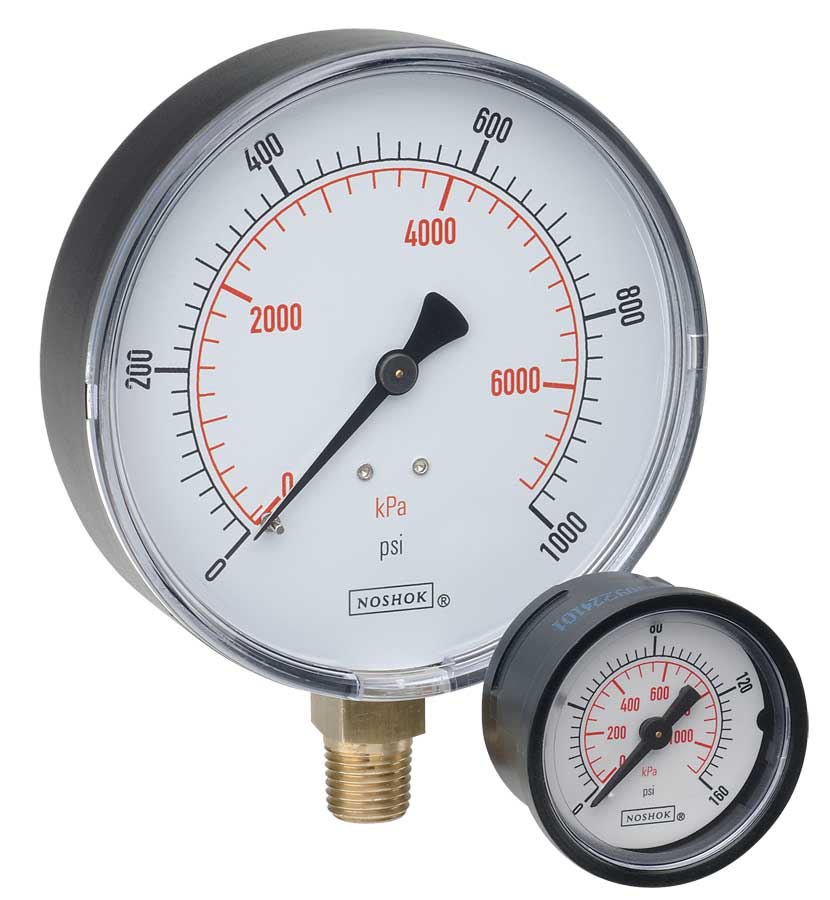 NOSHOK ABS & Steel Dry Pressure Gauges 100 series
 NOSHOK Low Pressure Dry Pressure Gauges-( 200 series)
 NOSHOK PT40 Series High Accuracy Transmitters-Replaces 100,200,615 series