



Flange Versus Threaded Diaphragm Seals Compared

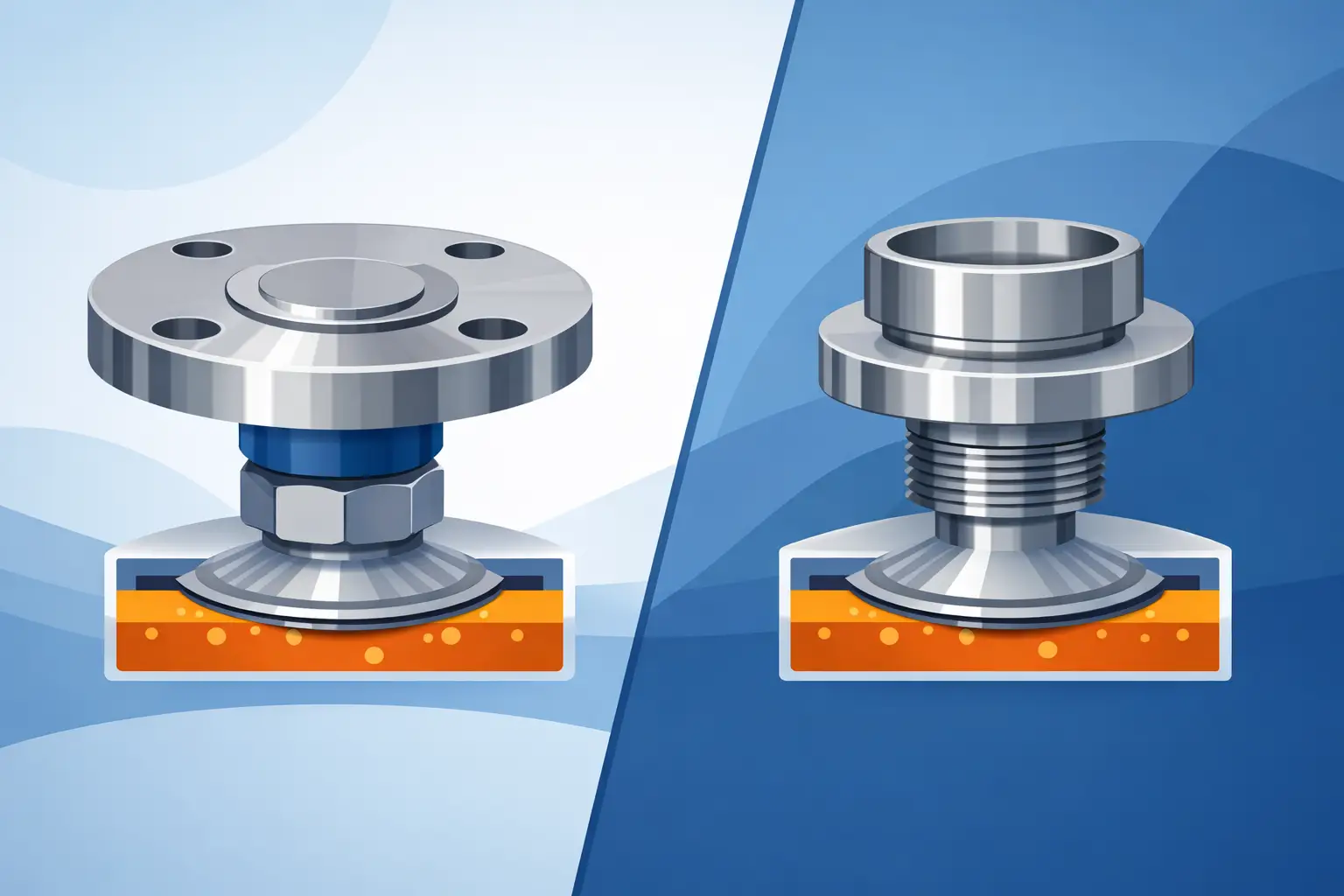
A diaphragm seal is selected at the process connection, not at the instrument shelf. That distinction drives the decision between flange versus threaded diaphragm seals. Both configurations isolate a pressure gauge, pressure transmitter, or switch from process media that could corrode, plug, solidify, crystallize, or expose the instrument to excessive temperature. The correct choice depends on the vessel or piping connection already in service, the properties of the media, required cleanability, and the plant’s maintenance practices.
For industrial buyers, the process connection must be evaluated as a complete assembly. A diaphragm seal may fit the pressure instrument mechanically while still being unsuitable for the process connection, wetted materials, pressure rating, or cleaning method. Flanged and threaded designs solve different installation problems, and neither is universally better.
Flange Versus Threaded Diaphragm Seals at a Glance
A threaded diaphragm seal mounts through a threaded process port, typically NPT. It is compact, direct-mountable, and commonly used where a vessel, pipe fitting, manifold, or pressure tap already has a female threaded connection. The wetted diaphragm is positioned at or near the process boundary, depending on the seal design.
A flanged diaphragm seal uses a bolted flange connection and gasketed joint. It is generally selected when the process equipment has a mating flange, when the process opening is larger, or when service conditions require an arrangement that is easier to inspect and remove. Flanged designs are common on tanks, reactors, process piping, and applications where a threaded connection would create a restricted process opening.
| Selection factor | Threaded diaphragm seal | Flanged diaphragm seal | |—|—|—| | Typical process connection | NPT threaded port | ANSI/ASME or other specified flange | | Installed footprint | Compact | Larger bolt-circle footprint | | Process opening | Usually smaller | Often larger and less restrictive | | Installation method | Threaded engagement | Bolts, gasket, and controlled tightening | | Common use | General industrial pressure taps | Vessels, piping, corrosive or difficult media | | Service access | Simple where port access is clear | Requires flange clearance and bolting access |
The table provides a starting point, but the final selection should be based on the actual process specification and the applicable pressure-temperature rating of every component in the assembly.
When a Threaded Diaphragm Seal Is the Better Fit
Threaded diaphragm seals are often the practical choice for standard industrial pressure points. If a line or vessel already has a properly sized female NPT port, a threaded seal can provide a compact installation without adding a flange nozzle or adapter. This can reduce installed space requirements and simplify replacement in maintenance-driven applications.
They are frequently used with pressure gauges, pressure transmitters, and pressure switches handling fluids that are moderately corrosive, viscous, dirty, or prone to plugging an instrument’s pressure port. The diaphragm creates the process barrier while the fill fluid transfers pressure to the instrument. Material selection remains critical. A 316 stainless steel seal may be appropriate for many services, while more aggressive chemical exposure may require alternate wetted materials.
Threaded designs also suit OEM equipment where the pressure connection is standardized across multiple assemblies. A manufacturer may specify a particular NPT size, diaphragm seal body material, instrument connection, and fill fluid to maintain repeatable installation dimensions and performance.
The limitation is the threaded process port itself. Small bores, dead legs, and recessed diaphragm arrangements can become problematic when the media contains fibers, solids, sticky residues, or crystallizing compounds. Threaded connections may also be less desirable where frequent washdown, sanitary cleaning, or full process drainage is required. Do not assume that a threaded seal is suitable simply because its pressure rating meets the application requirement.
Thread Engagement and Installation Control
Threaded installations require more than matching the nominal NPT size. Verify the process thread standard, female port condition, available engagement depth, sealant compatibility, and wrench clearance. Over-tightening can damage threads or distort components. Under-tightening can create a leak path.
The pressure instrument must also be supported appropriately. A heavy transmitter, a gauge with a long case extension, or a capillary-mounted assembly can impose leverage on the threaded connection. In vibrating service, consider the total mass, mounting orientation, and need for separate instrument support.
When a Flanged Diaphragm Seal Is the Better Fit
Flanged diaphragm seals are generally selected for process connections that need a larger, more accessible wetted interface. They are a common choice on tanks and piping where the process nozzle is flanged, where the medium is viscous or solids-bearing, or where maintenance personnel need to inspect the process opening during shutdowns.
The flange connection can also be advantageous when matching established plant piping standards. An existing ANSI/ASME flange class, size, facing, and material specification provides a defined mechanical interface. The buyer must still confirm that the diaphragm seal flange matches the mating flange in nominal size, pressure class, facing, bolt pattern, and material requirements.
For difficult media, a flanged seal can reduce the risk associated with a small threaded opening. This does not eliminate fouling by itself. Diaphragm geometry matters. A recessed diaphragm may retain product, while a flush diaphragm is better suited to services where buildup at the sensing surface would compromise response or require frequent cleaning.
Flanged configurations are also often preferred when the process connection must be removed and reinstalled under controlled maintenance procedures. A bolted connection takes more time than a threaded seal, but it offers a familiar, inspectable joint for many plant maintenance teams. Gasket selection, bolt torque, flange alignment, and access for tools all need to be considered before specifying the assembly.
Flange Ratings Are Assembly Ratings
A flange class is not a stand-alone answer to pressure capability. The allowable pressure changes with temperature and material group, and the diaphragm seal itself may have limits that differ from the mating process flange. Confirm the seal body rating, flange rating, diaphragm material, fill-fluid temperature range, instrument rating, and any capillary or cooling element limitations.
This is particularly relevant in steam, thermal oil, high-temperature chemical processing, and vacuum service. A pressure instrument may be protected from direct process contact, but the diaphragm seal fill system still has operating limits. High temperature can affect fill-fluid expansion and instrument zero, while vacuum service can require a fill system specifically designed for the application.
Match the Seal to the Media and the Measurement Requirement
The connection style is only one part of diaphragm seal selection. The wetted diaphragm and seal body must resist the process media, and the fill fluid must be compatible with the operating temperature and measurement range. For food, beverage, pharmaceutical, or other hygienic duties, cleanability and connection geometry may outweigh the compactness of a threaded seal. For refinery, chemical, and general manufacturing service, corrosion resistance, plugging potential, and pressure-temperature conditions may be the deciding factors.
Instrument accuracy also deserves attention. Every diaphragm seal system introduces operating considerations related to temperature, elevation, fill volume, diaphragm stiffness, and capillary length where remote mounting is used. A low-pressure transmitter can be more sensitive to these effects than a higher-range gauge. Specify the full system rather than treating the diaphragm seal as an accessory added after the instrument has been selected.
For direct-mounted assemblies, verify the instrument connection type and orientation. For remote diaphragm seal systems, define capillary material, length, armor or protective covering where needed, mounting elevation, and ambient exposure. A correct flange or thread choice will not compensate for an incorrectly configured remote seal system.
A Practical Specification Check Before Ordering
Before selecting either connection style, document the process connection and instrument requirements together. The required data normally includes process media, normal and maximum pressure, normal and maximum temperature, vacuum conditions, wetted materials, connection standard and size, instrument type, instrument range, and mounting arrangement. Include cleaning method, solids content, vibration, and any requirement for sanitary or hazardous-area compliance.
For a flange-mounted seal, add flange size, class, facing, and mating material. For a threaded seal, add the exact thread standard, gender, nominal size, and available port geometry. NPT, BSPP, BSPT, metric, and proprietary process connections are not interchangeable.
Mass Measure supports spec-driven sourcing of NOSHOK pressure instrumentation and related system components. When replacing an existing diaphragm seal assembly, confirm the complete part configuration rather than matching only the visible connection. A change in diaphragm material, fill fluid, instrument connection, or flange class can affect both fit and measurement performance.
The best selection is the one that fits the existing process interface, keeps the diaphragm exposed to representative process pressure, and gives maintenance personnel a connection they can safely inspect and service. Start with the nozzle or pressure tap, then build the diaphragm seal and instrument assembly around the actual process conditions.
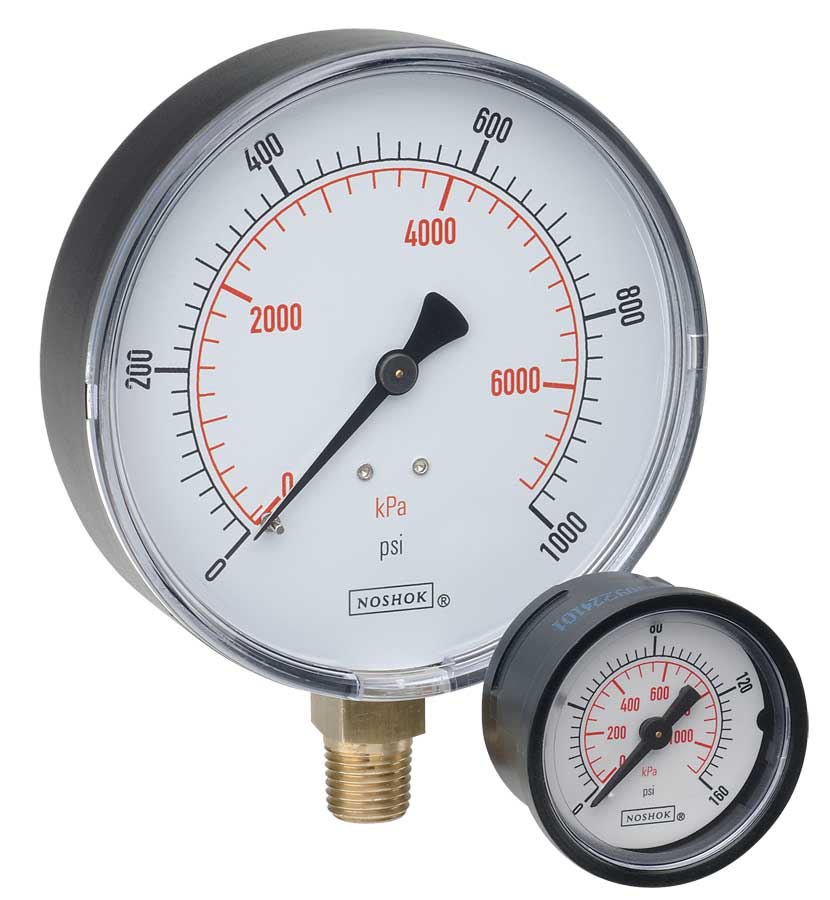 NOSHOK ABS & Steel Dry Pressure Gauges 100 series
 NOSHOK Low Pressure Dry Pressure Gauges-( 200 series)
 NOSHOK PT40 Series High Accuracy Transmitters-Replaces 100,200,615 series