

Avoiding Hidden Costs in Industrial Procurement

Table of Contents
- The Hidden Costs That Quietly Drain Industrial Procurement Budgets
- How to Calculate Total Cost of Ownership in Procurement
- The Industrial Procurement Checklist: Eight Control Points Before You Issue a Purchase Order
- Building a Supplier Quote Comparison That Survives Finance Review
- Instrument Calibration and Repair Costs Across the Asset Lifecycle
- Landed Cost, Freight, and Tariffs on Industrial Instrumentation
- Conclusion
- Frequently Asked Questions
Last Updated: October 12, 2026
The Hidden Costs That Quietly Drain Industrial Procurement Budgets
The cheapest quote on your desk is often the most expensive purchase you will make this quarter.
Industrial procurement is the process of sourcing, buying, and managing the materials, components, and equipment a facility needs to keep running. It covers everything from supplier selection and purchase orders to freight, inspection, and the cost of a failed part sitting in a critical loop.
Most teams measure that process by unit price alone. That is a mistake.
Why Unit Price Is the Least Useful Number on a Quote
A gauge quoted at the lowest price can still be the worst deal in the room. Unit price ignores freight, duties, lead time, calibration, and the cost of downtime when a part fails.
Here is what the number on the quote leaves out:
- Freight, shipping, and customs duties on imported parts
- Calibration and re-verification before installation
- Lead time risk when a line is down and waiting
- Quality costs from returns, rework, or premature failure
- Administrative overhead to process, match, and pay the invoice
A part that saves a few dollars up front but fails in a high-pressure corrosive line can cost far more than the entire order. That is the trade most buyers miss.
Buying on unit price alone is the single most common mistake in industrial sourcing. The consequence is not a slightly worse deal; it is a failed instrument in a critical loop and days of lost production.
How to Calculate Total Cost of Ownership in Procurement
Total cost of ownership in procurement is the full cost of a purchase across its entire life, not just the price you pay at checkout. It adds up acquisition, freight, duties, installation, calibration, maintenance, and disposal into one number you can compare across suppliers.
Most buyers stop at the bullet list. The useful part is the math. Here is a repeatable method you can run on any quote.
A Step-by-Step TCO Calculation
- Set the evaluation period. Use the asset’s expected service life, or a fixed window such as five years, so every quote is compared over the same horizon.
- Convert one-time costs to the period. Acquisition, freight, duties, installation, and calibration at commissioning are counted once.
- Annualize recurring costs. Multiply annual calibration, repair, spare parts, and energy use by the number of years in the period.
- Add risk-weighted costs. Estimate downtime hours per failure, multiply by the cost of lost production per hour, and multiply by the expected number of failures. This is the line most buyers omit entirely.
- Subtract residual value. If the asset can be resold, serviced, or traded in at end of life, credit that amount back.
- Divide by units produced or hours run. This gives a cost-per-unit figure that finance can compare across suppliers and across asset classes.
The formula in plain terms:
TCO = Acquisition + Landed + Installation + (Annual Operating x Years) + (Downtime Cost x Expected Failures) – Residual Value
A Worked Industrial Example
Consider a pressure transmitter specified for a corrosive process line. Supplier A quotes a lower unit price but ships from overseas with a long lead time and no local calibration support.
Run both through the six steps above. Supplier A’s lower acquisition cost is offset by higher freight and duty, longer lead time risk, and the cost of shipping the unit out for calibration each year.
The Cost Categories Most Buyers Leave Out
Three categories do the most quiet damage. First, process inefficiency: manual purchase orders, spreadsheet tracking, and invoice matching that eats staff hours. Second, maverick spend, or off-contract purchases made outside approved suppliers, which breaks pricing agreements and hides true spend. Third, compliance gaps that surface later as rework or rejected audits.
None of these show up on a quote. All of them hit the bottom line.
Build the TCO model once, then reuse it. A spreadsheet with the six steps above, saved as a template, turns a two-hour analysis into a fifteen-minute comparison for every future quote.
The Industrial Procurement Checklist: Eight Control Points Before You Issue a Purchase Order
A purchase order is the last chance to catch a hidden cost before it becomes real. This industrial procurement checklist gives you eight control points to run through before you commit.

- Confirm the spec, not just the part number. Legacy equipment often needs a specific series, not a close match.
- Price the landed cost. Add freight, duties, and tariffs before you compare.
- Check lead time against your production schedule. A cheap part that arrives late is not cheap.
- Verify supplier authorization. Confirm the warranty is real and backed by the manufacturer.
- Review payment terms and minimum order quantities. Both affect cash flow.
- Plan calibration and repair. Know who services the instrument after installation.
- Score supplier performance history. Late deliveries and quality misses are a cost.
- Document the total cost of ownership. Compare quotes on life cost, not unit price.
Ask every supplier for landed cost in writing before you compare quotes. Buyers who skip this step discover the freight and duty charges only after the invoice arrives, when there is no room left to negotiate.
Building a Supplier Quote Comparison That Survives Finance Review
A supplier quote comparison fails finance review when it compares unit prices and nothing else. Finance wants the number that hits the budget, and that number is total cost of ownership. Build your comparison around that, and the approval gets easier.
The strongest tool here is a worksheet that forces every quote onto the same playing field.
A Practical Worksheet Structure for Comparing Quotes
Use this structure for each quote you receive. Fill in the same fields for every supplier so the comparison is fair.
| Field | What to Record | Why It Matters |
|---|---|---|
| Unit price | Base cost per item | Starting point only |
| Landed cost | Freight, duties, tariffs | True delivered cost |
| Lead time | Weeks to delivery | Downtime risk |
| Calibration | Included or extra | Lifecycle cost |
| Warranty | Terms and coverage | Risk transfer |
| Payment terms | Net days and MOQ | Cash flow impact |
| Supplier risk | Performance history | Supply chain resilience |
Score each row, then total the columns. The supplier with the lowest total, not the lowest unit price, is your real best value.
The quote that wins finance review is the one that shows total cost of ownership, not the one with the smallest unit price.
Instrument Calibration and Repair Costs Across the Asset Lifecycle
Calibration and repair costs are the hidden line item that grows every year an instrument stays in service.
These costs fall into a few buckets:
- Routine calibration: scheduled verification to keep readings accurate
- Repair: fixing a failed gauge, valve, or transmitter
- Replacement: buying new when repair no longer makes sense
- Downtime: the production cost while the instrument is out of service
The decision between repair and replace usually comes down to turnaround time and total cost.
At Mass Measure, our repair and calibration services support the full lifecycle of your instrumentation, so you are not left sourcing a replacement every time a gauge drifts.
Landed Cost, Freight, and Tariffs on Industrial Instrumentation
Landed cost is the total you pay to get a part from the supplier’s dock to your facility, and it is where international sourcing surprises most buyers. Freight, customs duties, and tariffs stack on top of the unit price, and they can change the ranking of your quotes entirely.
Building the Landed Cost Number
Start with the unit price, then add each layer in order:
- Freight, weight, dimensions, mode (air vs. ocean vs. ground), and whether expedited shipping is required to meet a production date
- Insurance, often a small percentage of declared value, but easy to forget on high-value instrumentation
- Customs duties, assessed at the border based on product classification and country of origin
- Tariffs, additional charges that shift with trade policy and product classification; these can change mid-contract
- Broker and handling fees, customs brokerage, terminal handling, and documentation charges
- Inland transport, the cost to move from the port of entry to your facility
The sum is your true delivered cost. Compare quotes on this number, not the unit price.
Industrial-Specific Cost Categories Buyers Miss
General procurement articles stop at freight and duties. Industrial buyers face additional layers that never appear on a quote:
- Tooling and setup charges, custom fixtures, molds, or calibration rigs required to produce or verify a non-standard part
- Minimum order quantities (MOQs), a low unit price on a large MOQ can tie up cash and warehouse space for years of demand
- Machine downtime, the production cost per hour while a line waits for a replacement part; this often dwarfs the part price
- Maintenance and spare parts, the ongoing cost of keeping the asset running, including consumables and wear items
- Quality failures, returns, rework, scrap, and the labor to investigate a failed part
- Production-line disruption, the ripple effect when one failed instrument stops an entire process
A part that saves a few dollars up front but fails in a high-pressure corrosive line can cost far more than the entire order. That is the trade most buyers miss.
Contract and Purchase-Order Cost Controls
Landed cost is not fixed at the quote stage. These contract terms move it after the fact:
- Escalation clauses, price adjustments tied to raw material indices or currency fluctuations
- Surcharges, fuel, energy, or expedited-handling fees added at shipment
- Renewal terms, automatic renewals that lock in a price you did not renegotiate
- Scope changes, engineering changes that trigger re-quoting and new tooling charges
- Invoice-to-contract matching, verifying that the invoice matches the purchase order and the contract before payment
Review each of these before signing, and set a calendar reminder for every renewal date.
A low-cost sourcing decision that ignores these layers can turn a bargain into a loss. This is why we quote bulk pricing with tariff charges included, so the number you see is the number you pay.
Buyers who source internationally and need landed cost certainty before they commit to a purchase order.
Conclusion
The gap between the cheapest quote and the best value is where industrial procurement budgets quietly bleed.
Mass Measure is built for exactly that. As a fully authorized distributor of the complete NOSHOK line, we back every order with verified authenticity, manufacturer-standard warranties, and bulk pricing with tariff charges included.
Get started with Mass Measure and source your pressure gauges, transmitters, and valves with total cost in plain sight.
Frequently Asked Questions
What costs are often left out of an industrial supplier’s quote?
Freight and shipping charges, customs duties and tariffs, expedite fees for short lead times, calibration certificates, and spare parts are the usual omissions. So are the internal costs of receiving, inspecting, and stocking the order. Ask for a landed cost breakdown before you compare suppliers, and confirm whether tariff charges are included or billed separately after delivery. A quote that looks cheaper at the unit line often costs more once these items are added.
How do you calculate total cost of ownership in procurement for industrial equipment?
Start with the purchase price, then add freight, duties, and installation. Add the expected calibration and repair costs over the service life, plus the cost of downtime if the instrument fails. Add administrative overhead for processing invoices and managing the supplier. Compare that full figure across suppliers rather than the unit price alone. Even a rough total cost of ownership in procurement beats a precise unit price comparison, because it reflects what you actually pay.
How can buyers compare supplier quotes on an apples-to-apples basis?
Normalize every quote to the same scope before scoring it. Confirm the part number, pressure range, wetted materials, accuracy class, and certification match your specification. Then list freight, tariffs, lead time, warranty terms, and payment terms in the same rows for each supplier. A supplier quote comparison only works when the specifications are identical; if one quote covers a different series or material, the price difference is meaningless.
How can procurement teams reduce costs without sacrificing product quality?
Attack process inefficiency and maverick spend before you attack price. Consolidating orders to fewer verified suppliers improves bulk pricing and reduces invoice errors from mismatched part numbers. Standardizing on one instrument series cuts spare parts inventory and training time. When you do negotiate, use spend visibility data and lead time history rather than a single quote. Quality costs from premature failures usually exceed any unit price saving from an unverified source.
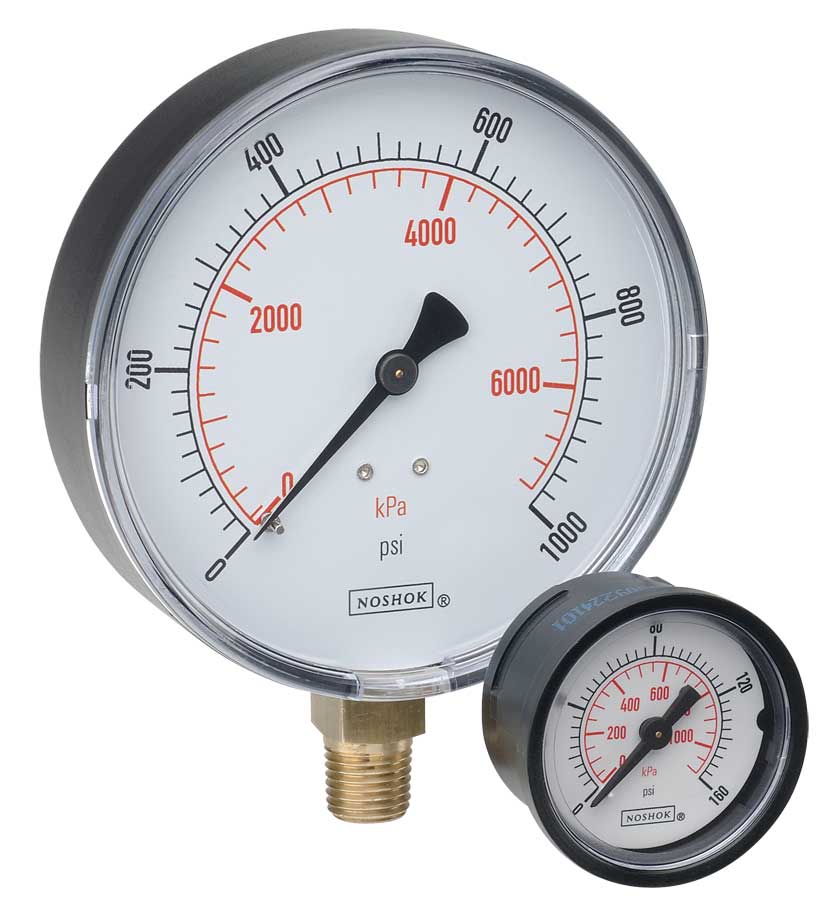 NOSHOK ABS & Steel Dry Pressure Gauges 100 series
 NOSHOK Low Pressure Dry Pressure Gauges-( 200 series)
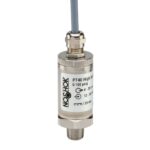 NOSHOK PT40 Series High Accuracy Transmitters-Replaces 100,200,615 series
