



When to Replace Diaphragm Seals in Service


A diaphragm seal is usually installed because the process is too demanding for a gauge, pressure switch, or transmitter to contact directly. It may isolate the instrument from corrosive chemicals, high-viscosity media, sanitary product, elevated temperature, solids, or plugging service. Knowing when to replace diaphragm seals is therefore not a routine cosmetic decision. It is a measurement-integrity decision that can affect product quality, process safety, maintenance cost, and the useful life of the connected instrument.
A seal assembly can look acceptable from the outside while producing slow response, a shifted zero, or unreliable pressure readings. Replacement should be based on inspection findings, process history, instrument performance, and confirmation that the seal design remains suitable for the application.
When to Replace Diaphragm Seals: Primary Indicators
The clearest replacement trigger is visible diaphragm damage. Pitting, cracking, creasing, perforation, distortion, or severe corrosion can compromise the pressure boundary and allow process media to enter the fill system or reach the instrument. Even minor diaphragm deformation matters when a transmitter is used for tight control, batching, level calculation, or safety-related monitoring.
Corrosion is not always obvious at first inspection. Chlorides, acids, caustics, sour service compounds, and abrasive slurries can attack diaphragm materials gradually. A 316 stainless steel diaphragm may be appropriate for general service yet unsuitable for a particular concentration, temperature, or contamination condition. If corrosion is recurring, replacing the seal with the identical material without reviewing media compatibility can repeat the failure.
Loss of fill fluid is another direct reason to remove the assembly from service. Evidence may include fluid around the instrument connection, unexplained zero shift, a sluggish indication, or a visibly damaged capillary. Diaphragm seal systems depend on a complete, stable fill-fluid volume to transfer process pressure accurately. A compromised fill system cannot be field-topped-off casually without controlling fluid type, evacuation, temperature effects, and calibration.
Replace the seal when the connected instrument will not hold calibration after a proper verification. Before assigning the problem to the diaphragm seal, verify the process pressure with a suitable reference and inspect the gauge or transmitter for its own failure modes. If the instrument repeatedly returns to a shifted zero, responds slowly, or shows inconsistent output despite a sound instrument calibration, the seal assembly requires evaluation.
Process Conditions That Shorten Seal Life
Diaphragm seals do not have a universal calendar-based service life. Service life depends on the process medium, temperature, pressure profile, cleaning method, installation geometry, and materials of construction. A seal in clean, noncorrosive liquid service may remain reliable for years. The same seal in hot polymer, abrasive slurry, vacuum cycling, or aggressive chemical service may require much more frequent inspection and replacement.
Pressure cycling is especially relevant. A diaphragm can withstand its rated pressure yet fatigue over time when exposed to rapid or repeated cycles. Pulsation from pumps and compressors can accelerate fatigue and may also cause unstable readings that resemble instrument failure. Where pulsation is present, assess whether a pulsation dampener, snubber, remote mounting arrangement, or different seal configuration is needed in addition to replacement.
Temperature can create a less obvious failure mode. High process temperatures can exceed the fill fluid’s operating capability, causing expansion, reduced accuracy, or permanent damage to the seal system. Low temperatures can increase fill-fluid viscosity and produce a slow response. Steam tracing, washdown, seasonal ambient exposure, and nearby heat sources should all be considered. A seal that appears intact may still be the wrong configuration if its fill fluid and temperature limits do not match actual operating conditions.
Vacuum service also requires attention. Some diaphragm seal designs and fill fluids perform differently under vacuum than under positive pressure. If the process periodically pulls vacuum, confirm that the diaphragm, system fill, and instrument range are selected for that condition. Recurrent zero errors following vacuum cycles are a reason to inspect the seal system rather than simply recalibrate the transmitter.
Performance Symptoms That Require Investigation
A pressure indication that becomes slow, damped, or unresponsive can point to a coated diaphragm. Product buildup on the process side adds stiffness to the diaphragm and reduces its ability to transmit pressure changes. This is common with viscous liquids, crystallizing materials, resins, food products, wastewater solids, and media that harden during shutdowns.
A flush-mounted diaphragm may reduce buildup compared with a recessed process connection, but it does not eliminate fouling risk. If routine cleaning no longer restores normal response, replacement is often more reliable than continued cleaning. Mechanical scraping, aggressive brushes, or improper chemical cleaning can damage a thin diaphragm and introduce a new failure mode.
Unexpected reading differences between redundant instruments are another useful warning sign. If two pressure points should track closely but one begins to lag or drift, inspect the process connection, impulse path where applicable, and diaphragm seal. Do not assume the transmitter electronics are at fault. In many applications, the mechanical interface between the process and instrument is the first component exposed to deterioration.
For gauges, a pointer that does not return to zero after isolation can indicate instrument damage, trapped pressure, or seal-related problems. For transmitters, compare the output against a calibrated pressure source and evaluate zero, span, repeatability, and response time. A replacement decision should be supported by this evidence, particularly where the seal is part of a high-value remote-mounted transmitter assembly.
Inspect the Entire Assembly, Not Only the Diaphragm
A diaphragm seal is a system of matched components. Inspect the process connection, diaphragm, upper housing, instrument connection, capillary if used, armor or protective tubing, mounting hardware, and connected gauge or transmitter. Leakage or damage at any point can affect accuracy or create a containment issue.
Pay close attention to threaded connections. Damaged threads, galling, overtightening, and incompatible thread forms can prevent proper installation and may distort the seal body. Confirm the existing connection standard before ordering a replacement. NPT, sanitary clamp, flanged, threaded, and specialty process connections are not interchangeable based on nominal size alone.
For remote seals, inspect capillary routing. Kinks, crushed sections, unsupported weight, excessive heat exposure, and vibration can damage the line or change its thermal behavior. The replacement assembly should preserve the original capillary length only when that length remains appropriate for response time and installation conditions. Longer capillaries can be useful for thermal isolation, but they also increase response lag and temperature-related error.
Replacement Requires More Than a Matching Connection
The correct replacement diaphragm seal must match the mechanical connection and the measurement requirements. Start with the process connection size, type, pressure rating, and sealing arrangement. Then verify diaphragm and wetted housing materials against the actual process medium, including concentration, operating temperature, cleaning chemicals, and possible contaminants.
Next, confirm the instrument-side connection and the pressure range of the gauge, switch, or transmitter. A seal assembly changes the measurement system’s behavior. The fill fluid, diaphragm size, capillary length, and operating temperature can influence zero suppression, elevation effects, response time, and available measurement range. These details are particularly important for differential pressure level applications and remote transmitter installations.
Sanitary applications require an additional review of surface finish, elastomer compatibility, clean-in-place and steam-in-place conditions, and required connection standard. A seal that fits physically may not meet hygienic process requirements. Likewise, chemical and oil and gas applications may require specific alloys, pressure classes, or material traceability based on plant standards.
When replacing an existing assembly, record the full part number and configuration from the nameplate whenever possible. If the nameplate is missing or unreadable, document the process connection, dimensions, wetted materials, instrument connection, pressure rating, capillary details, fill-fluid requirements, and service conditions before removing the unit. This reduces the risk of ordering a seal that mounts correctly but performs incorrectly.
Avoid Replacing a Seal Without Finding the Cause
A failed diaphragm seal can be a symptom of a process or installation problem. Replacing it without identifying the cause may result in another premature failure. Review whether the process chemistry changed, operating temperatures increased, cleaning procedures were modified, pressure spikes occurred, or vibration became more severe after equipment changes.
A material upgrade may be necessary, but it is not automatically the right answer. Higher-alloy materials can improve corrosion resistance while increasing cost and lead time. A different diaphragm design, flush connection, protective ring, remote mounting arrangement, or fill fluid may solve the underlying problem more effectively. The selection should be driven by documented process conditions rather than a general preference for a more expensive material.
For critical measurements, keep a documented inspection interval based on the service history of the specific application. Trending calibration adjustments, seal replacements, process upsets, and cleaning events can reveal patterns that a simple annual replacement schedule will miss. A seal in stable service may only need periodic verification, while a seal exposed to fouling or chemical attack may need planned replacement before measurement performance declines.
Before placing a new diaphragm seal assembly into service, verify the configuration against the application, inspect shipping protection, install it using the correct gasket or sealing method, and perform an appropriate functional check. A properly selected replacement restores more than a pressure signal – it restores confidence that the instrument is measuring the process rather than the condition of a failing isolation barrier.
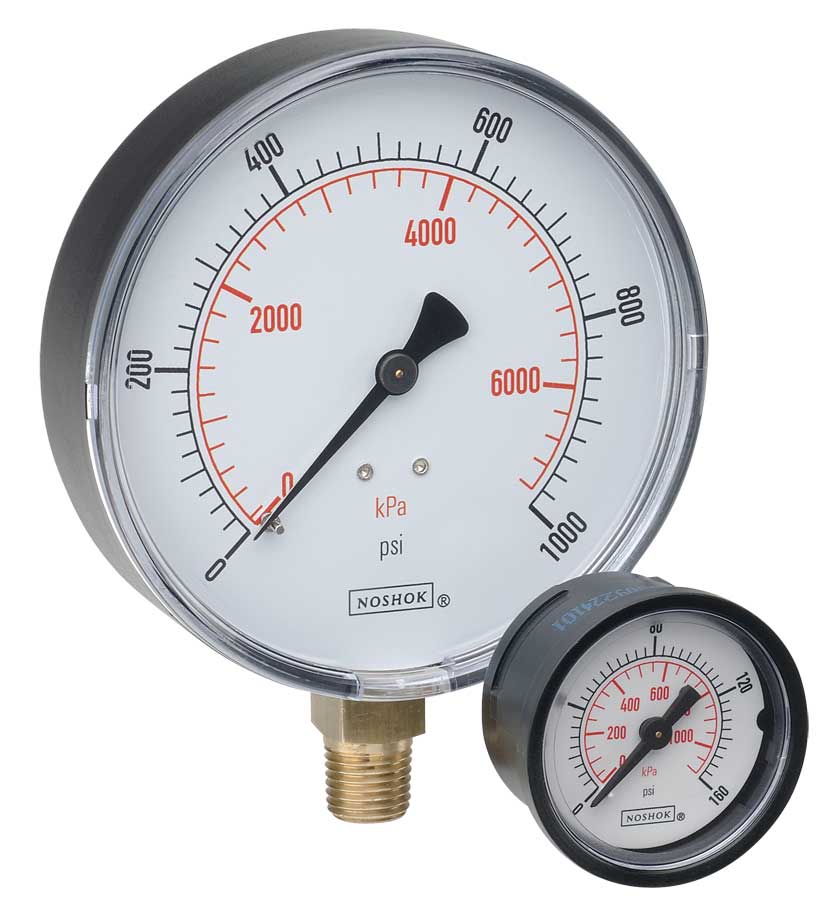 NOSHOK ABS & Steel Dry Pressure Gauges 100 series
 NOSHOK Low Pressure Dry Pressure Gauges-( 200 series)
 NOSHOK PT40 Series High Accuracy Transmitters-Replaces 100,200,615 series
